The twin threats of climate change and population growth place an increased burden on global food production. With ecological disruptions and food demand on the rise, industry leaders are seeking technology-driven alternatives to food production that may tackle looming food security threats.
Controlled Environment Agriculture has emerged as a potential solution to food insecurity. Though still in its nascent stages, 2022 saw a surge of investment in controlled environment agriculture, particularly in North America and the Middle East. Recent reports from The Brainy Insights forecast further growth, with the global market expected to rise from $85.26 billion in 2022 to $433.19 billion in 2032. The growing interest in controlled environment agriculture is clear, but what exactly is it, and what makes it so appealing to both governments and food producers?
What is controlled environment agriculture?
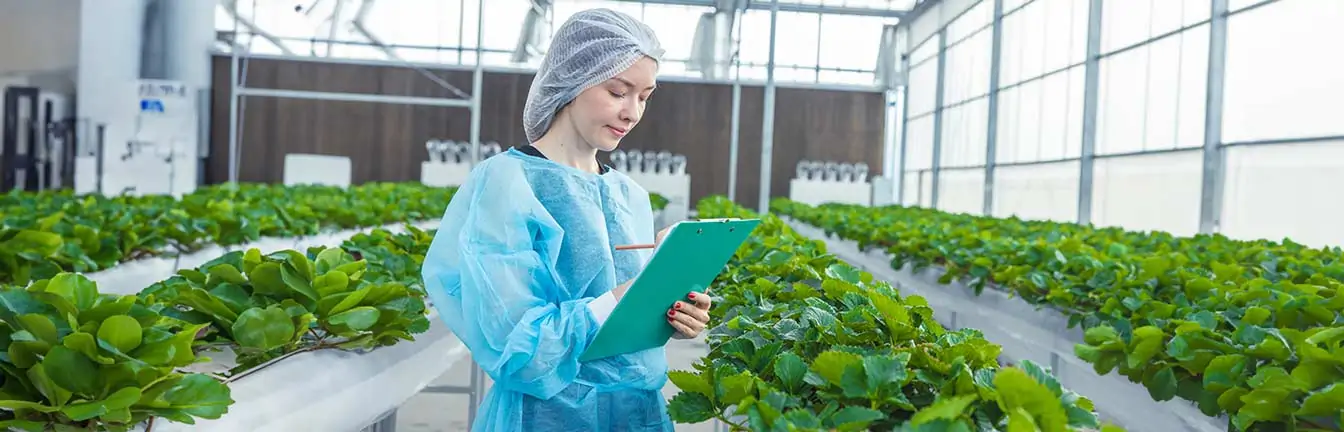
Controlled environment agriculture (CEA) comprises various farming methods, including greenhouse farming, vertical farming, and urban agriculture. These methods primarily consist of growing crops in a controlled environment without the influence of external factors. Crops are typically grown indoors, or within structures such as greenhouses. By regulating environmental elements like temperature, humidity, light, and soil content, farmers can maximise crop growth. CEA farms often utilise methods such as aeroponics, hydroponics, and aquaponics, where traditional soil is replaced by nutrient rich water or mist.
What role can controlled environment agriculture play in food security?
To tackle long-term food insecurity, growers must increase food productivity, resilience, and efficiency. With this in mind, CEA has many unique advantages over outdoor farming methods, and can potentially play a key role in this transformation. The primary advantage to CEA is its reliable and consistent output. CEA enables year-round production of seasonal crops by maintaining optimum levels of light and temperature. This removes the need for seasonal harvests and substantially increases productivity. Strict control over carbon dioxide levels and soil nutrients also allow growers to maximise yield and quality. Moreover, crops are isolated from environmental disruptions such as droughts, flooding, pests, weeds, and diseases that many otherwise reduce yields.
Vertical farms also improve food productivity by working efficiently in limited space. By stacking crops in vertical tiers, farmers can cultivate more crops in smaller areas, with roughly one acre of indoor farming offering equivalent production to six acres of outdoor capacity. This allows vertical farms to be built in urban areas or regions with limited arable land. This makes them an appealing solution for regions with harsh climates, such as the Middle East and North Africa.
Barriers to adoption
Despite the benefits listed, there are considerable challenges that have hindered widespread adoption. One of the hardest obstacles to overcome is the substantial initial setup cost of CEA facilities. Establishing CEA farms is a complex undertaking that requires considerable investment in infrastructure, equipment, and agtech – all of which will be costly, particularly in developing countries. Moreover, these new practices will require specialised knowledge and expertise in fields such as agronomy, hydroponics, and plant physiology without which farmers will be unable to maintain their crops.
High energy costs are another major barrier to entry. Artificial lighting and climate control systems are energy intensive, leaving CEA farms extremely vulnerable to increases in electricity prices. The ongoing global energy crisis has highlighted this issue, with many facilities failing due to high energy costs.
Who is driving the adoption of controlled environment agriculture?
While barriers have slowed widespread adoption of controlled environment agriculture, the concept has seen some success in the Middle East, where lower energy costs and a keen interest in ensuring food security from local governments has ensured success. Controlled environment agriculture allows the region to produce food locally in environments that would be otherwise incapable of conventional agriculture. With nations such as the UAE being heavily reliant on food imports and lacking local food production, the recently opened Emirates Crop One – touted as the world’s largest vertical farm – is a major step toward a sustainable and secure food source for the Middle East.
By contrast, many European CEA enterprises have seen significant layoffs and bankruptcies as a consequence of the recent energy crisis. Companies such as Agricool and Glowfarms have shut down in recent months, and reports from the European Institute of Innovation & Technology (EIT) suggest that CEA-produced food may not be commercially viable in Europe, as reliable outdoor farming suffices. EIT also indicate that economic viability may only lie in extreme climates like deserts.
While CEA has been touted as a solution to food insecurity, it is notably absent in the countries most impacted by food poverty. CEA can make sweeping improvements to food security in regions such as North Africa, however this would require policy changes and investment in research, capacity development, and training – a hard sell for a region burdened by socioeconomic challenges and limited resources.
In the long term, advances in technology and the stabilisation of energy prices may enable CEA to become economically viable, but for now, the sector remains reliant on venture capital, with short-term profitability not guaranteed.
Think before you invest
Reliable access to safe, nutritious, and secure food is a key concern for consumers, governments, and businesses alike. As climate change and population growth continues, it is critical that food producers introduce practices that secure sufficient food supplies. Emerging solutions such as controlled environment agriculture are promising but challenging. At Farrelly Mitchell, we recognise the importance of food security programs and we are dedicated to supporting governments, agencies, and corporates in adopting robust food security solutions.
Our food and agribusiness consultants provide actionable recommendations and strategic support to our clients. Our agtech consultants combine deep sector knowledge with commercial and technical insights to identify suitable technologies and evaluate their feasibility. We support business plans from strategy to execution, ensuring that our clients achieve their security, sustainability and commercial goals.
To leverage our insights and optimise your processes, get in touch with our expert team today.