
A new modelling study finds that scaling up silvopastoral systems across Mediterranean Europe identifies a clear challenge: strategies that capture the most carbon per hectare cover only small areas, while those that capture the most carbon in total must spread across vast, less productive land. The work, by Diogenis Kiziridis, Ilias Karmiris, and Dimitrios Fotakis of the Forest Research Institute at Greece’s Hellenic Agricultural Organization DIMITRA, was published in the journal Sustainability in January 2026. The study deliberately avoids prescribing one “best” strategy. Instead, it lays out the underlying trade-off clearly, acting as a decision-support tool that lets policymakers and funders match strategies to their budget and sequestration targets.
An efficiency versus extent trade-off
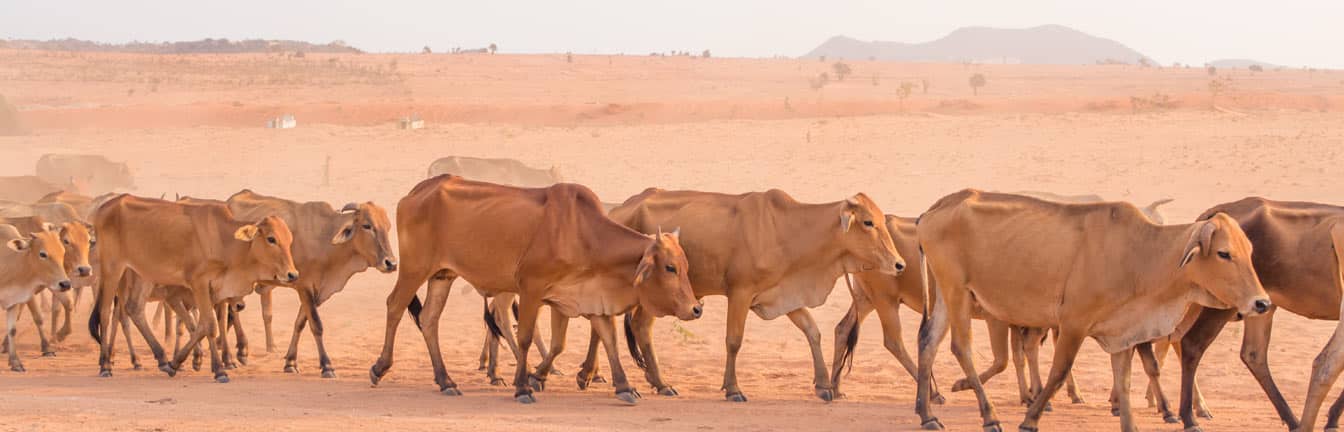
Silvopastoralism integrates trees, grazing livestock, and pasture on the same land, and the European Union counts it among its nature-based routes to climate neutrality. To test where it could deliver, the authors ran 4,064 scenarios across the EU27 Mediterranean region, varying constraints such as slope, land suitability, existing tree cover, livestock density, and protected-area status. Filtering these produced 40 optimal scenarios that together traced an inverse relationship. The most efficient programmes captured up to 2.5 tonnes of CO2 per hectare each year, but only existed on small, highly suitable patches of land. The most expansive scenarios reached total gains approaching 10 million tonnes of CO2 a year, but only by absorbing large areas, which in turn pull the average rate down to roughly 0.5 tonnes per hectare.
Three strategic regimes
The authors identify three distinct policy regimes. Conservative regimes concentrate on small, high-yielding areas to maximise carbon gained per euro and are suited to a limited-budget scheme. Expansive regimes spreads intervention widely to maximise the total carbon sink and are best suited to nations with ambitious targets but result in a lower average capture rate per hectare. A balanced regime sits between the two; it captures a large share of the achievable gains on a feasible patch of land before returns begin to diminish sharply.
Marginal lands, not cropland, drive the gains
Ultimately, one of the central (and policy-relevant) findings is that converting arable land is rarely a leading source of carbon gains in any region, despite the size of the opportunity. Productive soils already hold relatively high baseline carbon, so the marginal benefit of converting them is smaller than that of restoring degraded land. The most efficient gains instead came from transitioning shrubby and sparsely vegetated land, and then grasslands, into wooded and agroforestry systems. The authors argue this means large-scale rollout can focus on marginal land and avoid competing with food production, a conflict that has dogged many other land-based mitigation strategies.
Where the potential concentrates
Spain and Greece emerged as two of the most suitable locations for silvopastoral systems. This is consistent with their long traditions of silvopastoralism (as seen in the Spanish Dehesa). The model found that the largest total gains were concentrated in the Spanish regions of Andalucía, Castilla-La Mancha, and Extremadura, with significant contributions predicted for central and southern Greece, and more modest contributions from Italy, Croatia, southern France, Portugal, and Sardinia. The study also distinguishes two kinds of terrain. The first are the large, continuous blocks which are suited to big coordinated “landscape-scale” programmes. The second are the more fragmented areas, such as parts of southern France and northern Italy, where suitable land is scattered. In these regions the authors note that voluntary, farmer-to-farmer approaches tend to work better than uniform, top-down schemes.
What the model can and cannot show
The authors are candid about the limits. The analysis compares a present-day baseline with a single 20-year projection rather than tracking carbon over time, and accumulation in these systems can take decades to settle, meaning actual results may vary. It optimises for carbon alone, leaving out co-benefits such as biodiversity, water regulation, and erosion control that are central to the wider case for silvopastoralism, and which a carbon-only lens can even work against. It is also purely biophysical: it shows where intervention would be effective, not whether farmers would adopt it, and it is worth noting that profitability, secure land tenure, transition costs, and social acceptance will ultimately impact uptake.
What this means for European land-use policy and investment
The study’s value is ultimately as a decision-support tool. By making the trade-off between intensity and scale explicit, and mapping it accordingly, it lets policymakers and funders match a strategy to a defined budget or sequestration target, and align it with European instruments such as the Common Agricultural Policy’s eco-schemes and national land-use and forestry plans. For investors and development finance institutions, it can signal where gains are most concentrated, which land types yield the strongest returns, and where broad rollout is realistic. The framework is also extensible, and so if economic costs and additional environmental objectives are added to it, its value as a decision tool is likely to grow.
At Farrelly Mitchell, our sustainability advisors and agroforestry consultants provide strategic, technical, and commercial expertise to help agribusiness owners and managers make informed decisions and achieve sustainable growth. We support clients in evaluating land-based carbon opportunities, agroforestry approaches and silvopastoral systems, as well as governments and policy makers develop the policy frameworks that fund them. With a proven track record across the food and agribusiness value chain, we combine local market insights with global best practices to optimise your operations, address complex challenges, and capitalise on emerging opportunities. Contact our experts today to discuss how we can support your organisation’s continued growth and development.