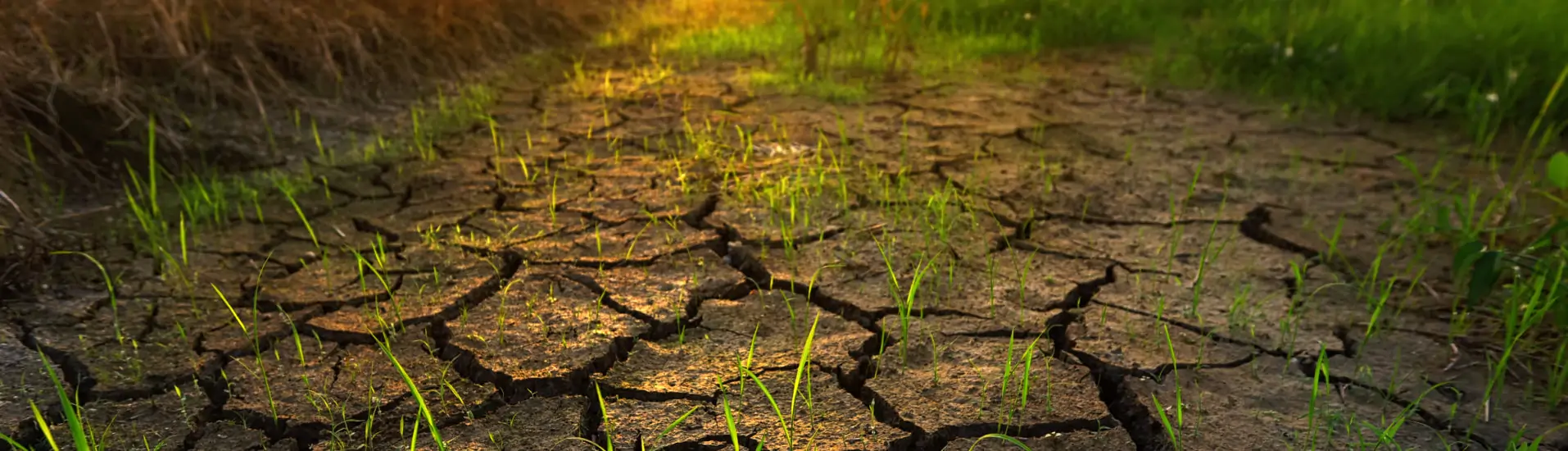
There have been growing concerns over food security during 2022, especially disruptions to food production due to the Russia-Ukraine war and rising energy costs. Despite the FAO Food Price Index (FFPA) falling for the last six months, the index in September remained 7.2 points (5.5%) above its value a year ago. An important factor is the impact of unusual weather patterns on food production over the summer.
What have been some of the major events surrounding food production this summer?
Although rain has now arrived in Europe the impact of significant heat waves is still being felt. Fears are growing about ‘heatflation’ in Europe after significant heat waves over the summer. Heatflation is the term coined for climate change-driven staple crop losses that could see already inflated food prices reach new highs this autumn, deepening the cost-of-living crisis.
A lack of spring rainfall, combined with drought and freak storms, have spoiled crops in Italy, France, and Spain, with many farmers and agricultural associations warning that this year’s yields will be significantly smaller than usual.
The rain has arrived too late to save many crops. In the EU soybean yields are 17% down on the five-year average, sunflower yields down by 13%, and maize yields were 19% below average, according to an EU bulletin published in September. One of the biggest concerns is for rice, which is especially sensitive to water stress, where yields are forecast to fall by 21% on the five-year average.
This is impacting the livestock sector, leading to soaring animal feed costs, compounded by the fact that pasture conditions have also been impacted by drought. Members of the European Parliament have expressed concerns over the impact on the livestock sector in their countries specifically on supplies of feed and fodder over the winter. According to Green MEP Martin Häusling:
If I look at livestock, we have a looming disaster….There are some stocks left over from last year. But once those stocks have been exhausted, the question will be about whether there will be culling, or whether some livestock farmers will completely leave the sector.
Italy has been especially affected. The Po River basin faced the highest level of drought severity. High temperatures have decimated a third of rice, corn, and animal fodder production. Locusts also infested Sardinia in the worst invasion in three decades, hurting hay and alfalfa harvests. A drought emergency has been declared in five Italian regions and insufficient water availability has led to multiple use restrictions across municipalities.
It is not just Europe as US corn (maize) producers are on track to produce their lowest yields since the drought of 2012, according to analysts at Rabobank. This year’s hard red winter wheat crop has been the smallest since 1963. In California, the rice harvest is half what it would be in a normal year.
Brazil’s agricultural GDP declined by 8% in the first quarter of 2022 due to a severe drought in the country’s south caused by a rare triple-dip La Niña. In Rio Grande do Sul 56% of last year’s soy harvest was lost. This was due to a rare three-year-long “La Niña” which sees cooler ocean temperatures and global shifts in rain patterns as the leading cause for last year’s poor harvest.
El Niño and La Niña events have become more frequent and more severe over the past 70 years, according to the latest Intergovernmental Panel on Climate Change report. It is predicted that these kinds of crop failures will become more frequent in the future.
What can farmers do to adapt and maintain food production in the face of climate change?
Aside from measures to reduce GHG emissions driving climate change, agriculture must adapt and build resilience to climate change. This includes adopting new technology as well as changing farming systems. A report published by the European Environmental Agency in 2019 recommended the following adaptation measures at farm level:
- Grow differently –, HNV or organic farming, modify crop calendars, use cover crops and field margins, use adapted crops, crop diversification and rotation, install greenhouses;
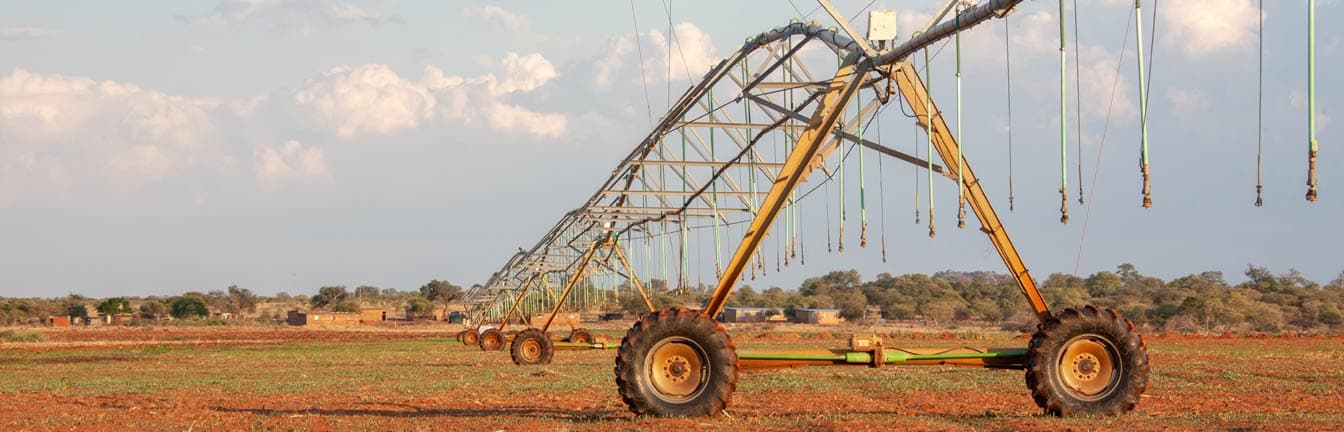
- Improve water use – Improve irrigation efficiency, ecosystem compatible drainage
- Change farming practices – Precision farming, no-till/ low-till systems, modify fertilization and spraying applications, farm activity diversification
- Change livestock practices – Breed livestock for greater tolerance and productivity, improve pasture and grazing management, improve animal rearing conditions, prevent climate change induced diseases for livestock
- Use protection and monitoring equipment
Precision farming can be applied to make the best use of scarce resources and improve efficiency – particularly the use of water under drought conditions. Research into crop protection can help to keep up to date on more rapidly emerging crop diseases and pest threats.
Crop improvement via modern breeding techniques along with efficient agronomic practices, innovations in microbiome applications and exploiting the natural variations in underutilized crops is an excellent way forward to fulfilling future food requirements.
Crop diversification will become more important as three crops – wheat, maize, and rice account for half of the world’s food supply. All are vulnerable to extreme weather conditions like drought and heat and alternative crops may help reduce climatic risks and boost resilience.
By diversifying and developing newer, hardier crop and livestock varieties like cassava, pearl millet, and goats that could better withstand things like heat, pests, and disease farmers and plant breeders could remain productive in the face of climate change and with fewer inputs.
The future of agriculture in the face of climate change
We are entering a new era where food production and security are back on the agenda, partly due to political and economic crises, but also the impact of climate change. In the future, agriculture will need to employ and range of strategies and innovative agtech to adapt to the challenges of more frequent extreme weather events such as drought and flooding.
Working across the food system in many locations around the world, we have an in-depth understanding of all the constantly evolving facets of the food and agricultural industry as well as insights and information on the latest practices and innovations. Our experts at Farrelly Mitchell can help you to make informed decisions about future investments and key policies.