
In less than a decade, Saudi Arabia has moved from importing roughly 60% of its poultry to producing close to 70% domestically. The Kingdom is now targeting 90% self-sufficiency by 2030. Behind these headline figures lies a deliberate strategy to compress the learning curve by importing expertise rather than waiting for it to develop organically at home.
This article examines the pros and cons of that strategy, covering how equity partnerships with global poultry leaders and imported technical expertise have accelerated production growth, why the model carries structural risks, and what the next phase may bring for policymakers, investors, and agribusiness operators.
Saudi Arabia’s technology transfer model
Few, if any, sovereign food security programmes have moved as fast as Saudi Arabia’s, which has achieved a level of growth over the last ten years that may have otherwise taken generations to achieve. Key to this has been acquisition, investment, and joint ventures with some of the world’s largest integrated poultry producers such as BRF, JBS, and others. By developing board-level influence in these companies, the Kingdom has secured a structured channel for accessing proprietary know-how that would take decades to develop organically. These arrangements act as a force multiplier for the Saudi Arabian poultry industry, with domestic producers gaining key insights into genetics, feed protocols, and management practices.
The results speak for themselves; Saudi Arabia’s output has grown by roughly 9% annually, and the planned trajectory implies an 18% expansion over the next twelve months. This is an aggressive but feasible target given the groundwork and partnerships already in place. However, this acquisition and investment strategy has not created a turnkey solution. What works elsewhere may not automatically transfer to a Saudi context. For instance, Brazil’s poultry industry is underpinned by abundant, low-cost domestic supplies of corn and soybean meal, whereas Saudi Arabia operates within a structurally import-dependent feed system and is therefore more exposed to price volatility, shipping disruptions, and foreign exchange dynamics. As a result, the competitive advantage embedded in BRF’s model cannot simply be replicated; it must be re-engineered.
For domestic operators the ability to adapt will be critical. This is likely to involve reformulating feed strategies around imported inputs, investing in storage and hedging facilities, optimising water and energy use, and generally aligning intensive production systems to the local climate, different operating models, and regulatory realities. Ultimately, the question is not whether Saudi entities have bought into best-in-class operators, but whether these systems can be effectively localised without eroding their underlying efficiencies.
Poultry production is deceptively technical. Competitive broiler operations depend on tightly integrated systems, and each element carries its own learning curve. The Saudi model has shortcut this process, but technology transfer only works if the receiving side can internalise and operationalise what is being transferred. Genetics protocols, feed formulation science, and biosecurity standards are not off-the-shelf products but complex systems that must be maintained, refined, and continuously updated.
Furthermore, they require trained personnel and institutional memory to optimise and improve. Without parallel investment in domestic human capital, the partnerships risk creating a permanent reliance on external expertise and a structural dependency that undermines the very self-sufficiency the strategy is designed to achieve. Presently, the expertise embedded in Saudi operations is largely imported, and the cost of maintaining that expertise is not a one-off transition cost but a recurring operating expense that will persist until domestic capability catches up. The development of institutional knowledge within Saudi entities across breeding, nutrition, and flock management over the next five to ten years will be crucial to determining whether the Saudi model succeeds on its own terms.
At the same time, input challenges may require investors to extend their technology transfer strategy further up the value chain.
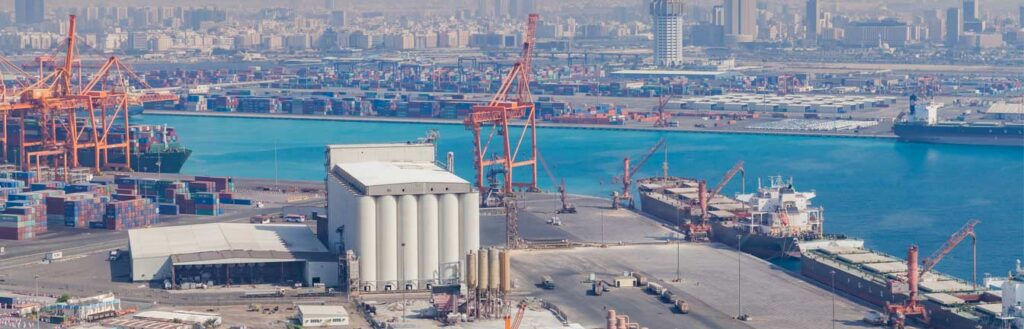
It is impossible to overstate the importance of developing and securing resilient feed supply chains for the Saudi poultry industry. While finished poultry imports have declined as a share of domestic supply, over 90% of feed ingredients continue to be imported. As such, even as Saudi Arabia’s poultry industry moves towards self-sufficiency at the finished-product level, it is much more exposed at the input level.
Ultimately, Saudi Arabia’s structural dependency on imported feed to sustain domestic production leaves the sector exposed to supply shocks that no amount of efficiency gains can offset. As the world becomes more volatile and geopolitical crises threaten to catapult global feed prices upwards, these risks become even more pronounced.
For now, risk exposure is being absorbed through government intervention. Feed ingredient subsidies and capital grants have proven effective in the short term. However, they are unlikely to present a sustainable long-term solution, especially when feed costs are likely to scale with production rather than taper off.
Building capability insulation, not just production insulation
The programme’s next phase will be defined less by how many broiler houses are built, and more by how effectively imported expertise can be converted into institutional memory and delivered via domestic human capital. Without that conversion, the Kingdom risks trading one form of dependency for another and paying a recurring premium for the privilege.
Operators that focus on building domestic understanding, be that through training programmes, third-level research partnerships, or the development and retention of locally trained specialists, will ultimately prove more resilient than those relying on overseas expertise and secondments.
The logical next phase of the Saudi strategy is what could be termed capability insulation: the deliberate conversion of imported practices and knowhow into local protocols. This is likely to require establishing dedicated centres of excellence as well as further integration with regional feed production partnerships. But perhaps most importantly, it will require the formalisation of knowledge absorption across existing partnerships. Only this can ensure that local technical expertise is measured and proven, rather than assumed.
Positioning for the next phase of Saudi food security
Saudi Arabia’s poultry programme is one of the most ambitious food localisation efforts of the past decade, delivering genuine and measurable progress, but as impressive as these milestones are, the transition is far from accomplished.
The maturation of the sector depends on recognising that self-sufficiency is not achieved at the finished-product line but through the patient accumulation of technical expertise at every level of the value chain.
At Farrelly Mitchell, our livestock and poultry consultants provide strategic, technical, and commercial expertise to help agribusiness owners, investors, and governments make informed decisions about food security programmes, technology transfer partnerships, and domestic capability development. With a proven track record across the poultry value chain in Saudi Arabia, the wider GCC, and global markets, we help our clients to optimise operations, address complex challenges, and capitalise on emerging opportunities. Our services include market intelligence & insights, risk analysis & management, strategy & execution, supply chain optimisation, technology & innovation, policy & regulation, and much more. Contact our experts today to discuss how we can support your business’ continued growth and profitability.