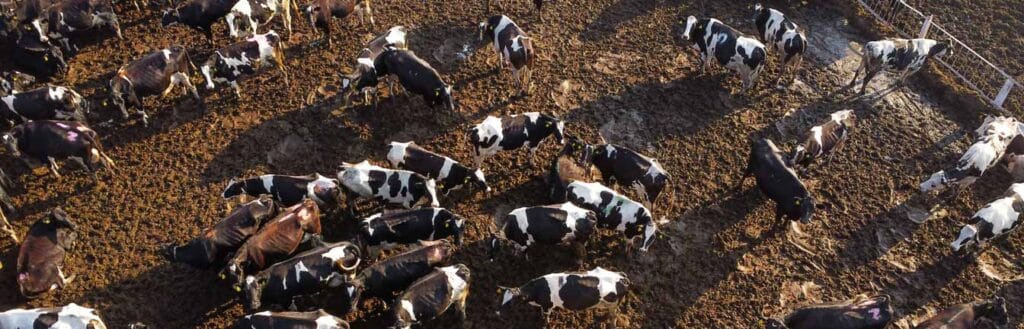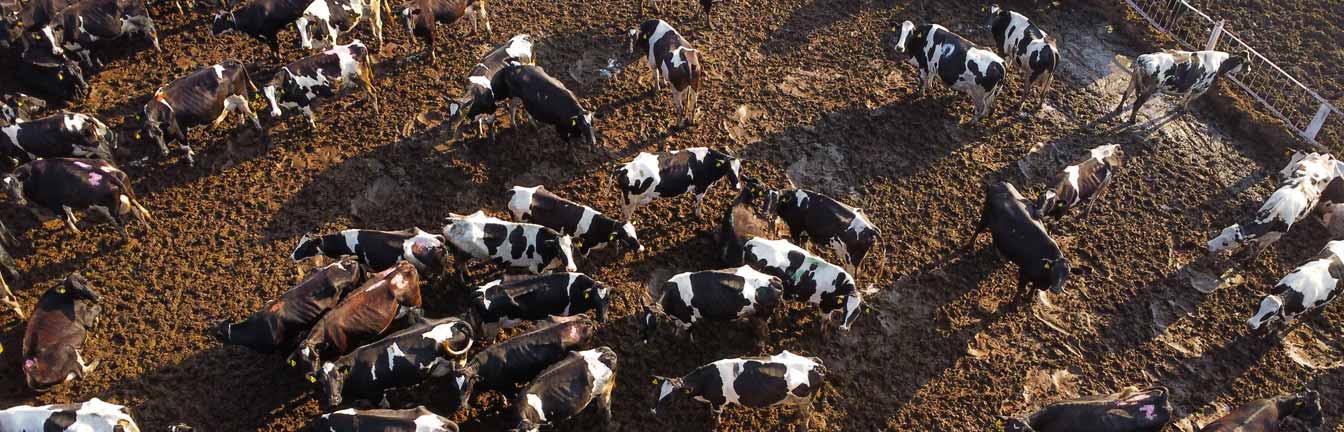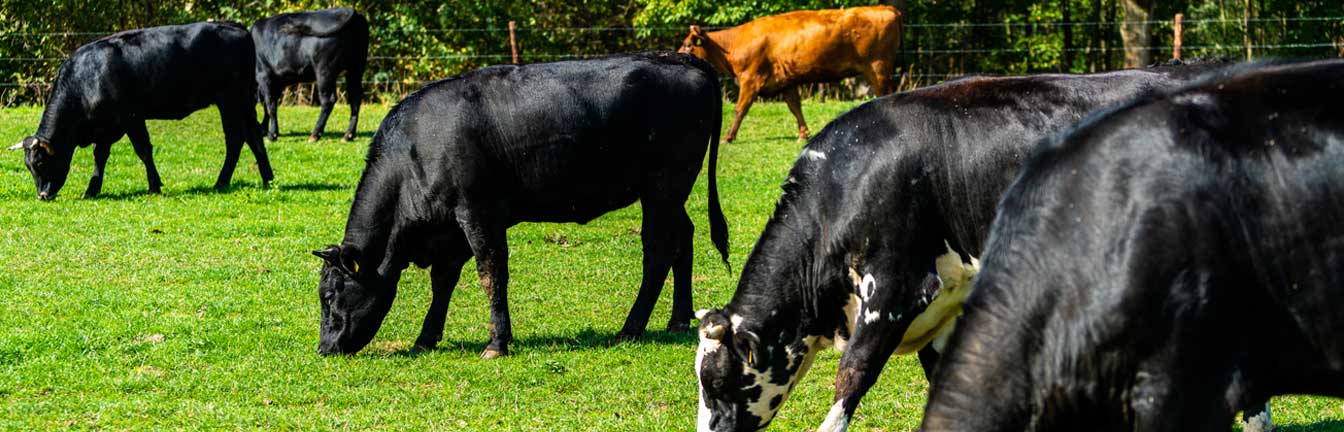
Four decades of selective breeding at the University of Florida have moved a single heat tolerance gene variant from Caribbean Senepol cattle into Holsteins, while leaving almost the whole of the Holstein genome intact. That is the central finding of a study published in the Journal of Heredity in 2025. Cows carrying the variant, known as SLICK1, which produces a short, sleek coat and better regulation of body temperature in heat, were found to retain on average just under 1% Senepol ancestry across their genome, and what remained was concentrated tightly around the target gene.
The trade-off facing Holstein farmers
Holsteins are the world’s dominant dairy breed and are prized for milk yield, but they cope poorly with hot and humid conditions. In contrast, Senepol cattle, developed in St Croix from European, Zebu, and African stock, carry at high frequency a mutation in the prolactin receptor gene that shortens the hair coat and improves thermoregulation. The trait is dominant, so a single copy is enough to produce it. Researchers at Florida began crossing Senepol with Holstein in the mid-1980s and backcrossing the offspring to Holstein, aiming for an animal that was Holstein in every respect other than the SLICK coat. The risk in any such programme is genetic drag: unwanted donor genes travelling alongside the desired trait, either because they sit close to it on the same chromosome or because they alter how it is expressed.
Tracking ancestry in SLICK gene cattle
The authors genotyped 31 Florida Holsteins carrying the SLICK1 variant and nine non-carrying siblings, all born between 2012 and 2023, against reference populations of 50 commercial Holsteins bred without any SLICK genetics and 45 Senepol. Using an array of genetic markers, they inferred along each chromosome whether a given stretch of DNA had come from Holstein or Senepol ancestry. Breeding records for the Florida herd were incomplete, so the researchers worked out how many generations had passed since the original cross from the genetic data itself. On that basis, most of the animals are at least seven generations on from the first Senepol mating. That is in line with earlier modelling work, which indicates that eight or more rounds of breeding back to Holstein are usually needed before a herd reaches the intended result.
Taken across the whole genome, less than 1% of the SLICK animals’ ancestry traced back to Senepol, at 0.99% on average, compared with 0.23% in their non-carrying siblings. The gap between the two groups is consistent, and the small amount found in the non-carriers is what ordinary inheritance would be expected to leave behind after many generations. On the chromosome carrying the slick gene, the figures look quite different. Here Senepol ancestry averaged 15.25% in the SLICK animals, although it varied considerably from one animal to another, and it was absent altogether in their non-carrying siblings. In short, the Senepol contribution survived where the breeders needed it and was cleared almost everywhere else, which is the ideal outcome for anyone seeking to commercially breed SLICK gene cattle.
It is worth noting that the study focus was on ancestry and not performance. It measured what proportion of each animal’s genome came from which breed; it did not measure milk yield or body temperature. However, in a previous study, which the authors cite, they found that SLICK gene cattle regulate body temperature better under heat stress and produce more milk in summer while yielding much the same in winter. The findings also rest on a single herd and a modest number of animals meaning further commercial field trials would be required to confirm whether these genetic findings hold broadly.
It is also worth noting that a laboratory test for the SLICK1 variant only became available in 2014, so before that point animals were chosen on the appearance of their coat alone. Direct DNA testing now enables precise genomic selection, removing ambiguity and potentially accelerating future backcrossing efforts.
What this means for dairy investors in hot climates
The result is both encouraging and sobering. It demonstrates that a climate resilience trait can be introduced into a high-yielding commercial breed without materially disturbing the genetics that make the breed commercially valuable. But it also shows what that costs in time: roughly four decades and seven or more generations to achieve near-complete genome restoration. The authors point to gene editing as the faster way to introgress the SLICK gene, noting that Angus and Jersey cattle carrying the SLICK1 variant have already been produced this way, and that simulations favour editing over conventional backcrossing with regards to both speed and genetic accuracy.
At Farrelly Mitchell, our livestock specialists provide strategic, technical, and commercial expertise to help agribusiness owners and managers make informed decisions and achieve sustainable growth. We advise on breeding strategy, heat stress mitigation, and dairy productivity in arid and tropical production systems. With a proven track record across the dairy and livestock value chain, we combine local market insights with global best practices to optimise your operations, address complex challenges, and capitalise on emerging opportunities. Contact our experts today to discuss how we can support your business’ continued growth and profitability.