The United Arab Emirates is systematically changing its approach to resource management, moving from a linear ‘take-make-dispose’ model towards a more sophisticated and circular approach. This evolution is spearheaded by large-scale capital investment in waste-to-energy infrastructure and a clear focus on the agri-food and organic waste sectors.
This strategic shift is not just a response to environmental concerns but a fundamental component of the nation’s broader industrial and food security ambitions. As the UAE pursues its National Food Security Strategy 2051 and scales domestic agricultural production, it will need to strike a careful balance between expanding output and ensuring that the resulting waste streams are sustainably captured, processed, and valorised. In this article we examine what is driving the UAE’s waste-to-energy build-out and assess the financial, environmental, and infrastructural challenges that will impact the country’s ability to scale these systems.
Municipal solid waste dynamics and the food waste crisis
Rapid urbanisation, high disposable income levels, and a large hospitality sector have led to significant pressure on municipal waste infrastructure. The Ministry of Climate Change and Environment estimates that the UAE generates millions of tonnes of food waste annually, the majority of which is sent to landfills. This represents a multi-billion-dollar economic loss each year.
The scale of this challenge has not gone unrecognised. Over the past decade, federal and emirate-level authorities have developed a layered policy architecture designed to redirect waste flows away from landfills and towards productive use.
At the top, the ‘Net Zero by 2050 Strategic Initiative’ and ‘Operation 300bn’ establish the direction of travel, with the latter explicitly identifying waste-to-resource technologies as a critical enabler of sustainable manufacturing.
Below that, Federal Decree-Law No. 11 of 2024 on the Reduction of Climate Change Effects requires all UAE public and private entities, including those in free zones, to measure and report greenhouse gas emissions.
Beneath all this, the UAE Circular Economy Policy 2021-2031 provides a national roadmap across four priority sectors (manufacturing, food, infrastructure and transport), supported by policies approved by the UAE Circular Economy Council in 2022.
Waste-to-energy projects in the UAE
The UAE’s waste-to-energy infrastructure currently consists of large-scale thermochemical plants, which handle the bulk of non-recyclable municipal solid waste, and specialised biochemical systems, which are utilised for moisture-rich organic waste.
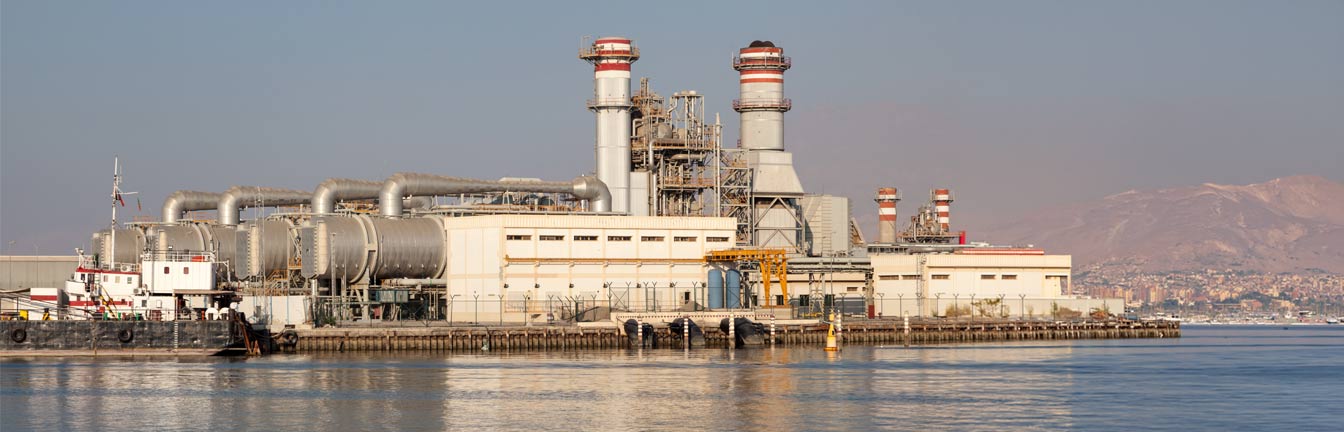
The most prominent example of the thermochemical approach is the Warsan Waste-to-Energy Centre (Dubai Waste Management Centre) in Dubai, which is one of the world’s largest and most advanced waste-to-energy facilities. It processes up to 6,000 tonnes of municipal waste daily and generates enough electricity to power 135,000 homes.
For organic waste, biodigestion is often the preferred disposal method. The Al Rawabi Biogas Power Plant, established in 2021, is the premier industrial example of this technology in the UAE. It converts organic waste from Al Rawabi’s operations, including livestock manure and expired dairy products, into 1.3 MW of energy and about 10 MT of organic fertiliser per day.
Significant opportunities exist for decentralised biodigesters within existing industrial clusters such as KEZAD in Abu Dhabi and Dubai Industrial City. In regions such as these, biodigestion systems could treat concentrated organic waste at, or near, the point of generation, providing renewable heat and power while avoiding the logistical costs associated with transportation. Many large-scale commercial kitchens are already adopting this approach. For instance, Emirates Flight Catering commissioned a large-scale aerobic biodigester in December 2025, which now processes up to 3.5 MT of food waste per day, diverting it from landfill, although it does not generate energy.
The UAE’s date palm sector presents a significant and largely untapped opportunity for waste valorisation. With over 40 million date palm trees, the country generates approximately one million tonnes of date-related biomass annually, much of which has historically been landfilled or burnt. This is beginning to change. Producers such as Al Barakah Dates Factory are actively repurposing manufacturing waste into animal feed, compost and other value-added products, while research into gasification has indicated strong potential for date palm waste to be used as a feedstock in the production of green hydrogen.
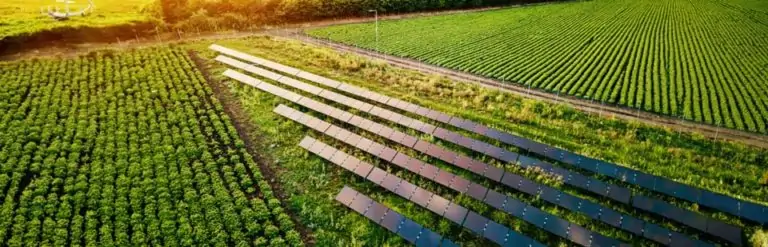
Taken together, these developments point to a maturing industrial ecosystem in which agricultural by-products are no longer treated as disposal problems but as natural sources of energy. It is also worth noting that these waste-to-energy projects are complemented by the planned remediation of existing landfills. For instance, BEEAH, Masdar, and the Sharjah Electricity, Water and Gas Authority have announced plans to convert Sharjah’s Al Saja’a landfill into a 68-hectare solar facility with 120 MW of capacity.
The challenges of scaling waste-to-energy in the UAE
Despite the UAE’s considerable progress, a number of structural challenges must be addressed if the waste-to-energy sector is to scale in line with the nation’s circular economy and net-zero ambitions. The National Food Security Strategy 2051 aims to make the UAE a global leader in food security, including through expanding domestic production using agri-tech. This expansion will naturally amplify the volume of organic waste flowing through the agri-food value chain, and these waste streams will need to be captured and valorised if the UAE is to deliver on its industrial decarbonisation targets.
While the UAE has made significant strides in commissioning flagship facilities such as Warsan and the Sharjah waste-to-energy plant, the broader infrastructure required to absorb projected waste volumes remains underdeveloped. Current processing capacity is concentrated in a small number of large-scale installations, with limited decentralised infrastructure serving the industrial clusters and agricultural zones where organic waste is generated. Bridging this gap will require coordinated investment in mid-scale anaerobic digestion systems, feedstock aggregation networks, and the logistics infrastructure to connect dispersed waste generators with centralised or semi-centralised treatment facilities.
The UAE has, however, established itself as the clear regional leader in circular economy infrastructure, and there are strong signals that this expertise is becoming an exportable asset. Bee’ah’s expansion into Madinah, where the company now provides integrated waste management services to over one million residents, and its partnerships in Egypt’s new administrative capital demonstrate that UAE circular economy know-how is in growing demand across the wider Middle East and North Africa region.
With equally ambitious targets emerging in neighbouring countries, for instance, Saudi Arabia’s National Waste Management Strategy, which targets 90% landfill diversion by 2040, there is significant potential for UAE-based waste management companies to leverage their domestic experience and expertise and expand into adjacent markets. Realising this potential, both domestically and regionally, will depend on the sector’s ability to move beyond flagship projects and build the scalable mid-tier infrastructure that links policy ambition to operational capacity.
Waste-to-energy project finance
Capital expenditure for waste-to-energy is significantly higher than for solar or gas-fired power. Large-scale plants in the UAE typically require an investment of approximately USD 400 to USD 600 per ton of annual capacity. To ensure their financial viability, most of these projects require long-term concession agreements with the procuring municipality as well as similarly long-term PPAs with utility providers.
The financial viability of private-sector waste-to-energy and recycling is also heavily dependent on the cost of landfilling. Where landfill gate fees are high, waste-to-energy and recycling facilities become more viable, as waste producers and municipalities are incentivised to divert material towards alternative options. Conversely, where gate fees are low, the commercial case for valorising waste streams is weaker. Historically, low landfill gate fees in the UAE have incentivised disposal over treatment. However, recent regulatory changes have increased fees for mixed waste, creating a powerful financial signal that the business case for waste-to-energy projects in the UAE is set to strengthen considerably.
Environmental challenges
Deploying waste-to-energy systems in the Middle East presents specific engineering challenges due to the region’s climatic and environmental conditions.
The extreme ambient temperatures in the UAE can significantly impact the thermal efficiency of waste-to-energy plants, particularly during the summer months. Unlike plants in more temperate climates which can utilise water cooling or smaller air condensers, UAE facilities often employ significantly larger air-cooled condensers. During peak temperatures, the heat-exchange capacity of these units is limited, which can lead to turbine backpressure issues. Furthermore, desert sand and dust can clog the condenser fins, requiring frequent, high-pressure cleaning to maintain performance.
Water-cooled systems face their own set of constraints. Waste-to-energy is inherently water-intensive, as it requires significant volumes of water for steam generation, flue gas treatment, and cooling processes. In an arid environment where freshwater is scarce and desalination is energy-intensive, this can create tension between the operational requirements of waste-to-energy facilities and the broader imperative to conserve water. To avoid relying on precious desalinated water, many waste-to-energy projects in the UAE have been designed to utilise treated sewage effluent (TSE) as their primary water source. This approach, while pragmatic, requires proximity to wastewater treatment infrastructure and introduces additional considerations around water quality and seasonal availability.
Conclusions and strategic recommendations
In the UAE, waste-to-energy has evolved from a nascent environmental ambition into an established and scaling industrial sector. Flagship facilities are operational, regulatory frameworks are tightening, and both public and private capital is flowing into the space at scale. What was once considered a disposal problem is now increasingly recognised as a strategic resource.
The agri-food sector sits at the centre of the waste-to-energy transition. It is both a significant generator of organic waste and a critical beneficiary of waste-to-energy outcomes. Anaerobic digestion and composting systems can supply agri-operators with renewable energy and nutrient-rich soil conditioners, all while diverting waste from landfills and contributing to emissions reduction targets.
For investors, the most compelling near-term opportunities lie in decentralised anaerobic digestion within established industrial clusters or near hospitality and commercial food production facilities. The valorisation of date palm biomass represents a particularly promising avenue, given the scale of available feedstock and the growing body of research supporting its conversion into energy, animal feed, and agri-inputs. Longer term, the UAE’s ability to export its circular economy expertise across the Gulf and into North Africa positions its practitioners as credible technology and services partners for neighbouring governments and private-sector operators.
At Farrelly Mitchell, we are committed to the development of sustainable and renewable energy solutions. With deep expertise in sustainability, clean energy, and agribusiness management, we help clients to identify and capture value from organic waste streams, build high-integrity projects, and successfully leverage circular economy practices to drive both profitability and positive environmental impact. If your agribusiness is looking to explore the potential of waste-to-energy solutions, better manage your climate risks, or simply understand how circular economy principles can support your strategic goals, contact us today.