Selecting cattle breeds for faster growth and better carcass performance does not need to come at the cost of their ability to withstand heat, ticks, and parasites. That is the central conclusion of a study led by K. C. Prayaga published in Animal Production Science.
In the study, researchers analysed the traits of 2,071 tropically adapted heifers across four research stations in northern Australia and traced the genetic links between those traits and the growth, reproductive, and carcass performance of the heifers and their half-sibling steers.
Brahmans held a clear adaptive advantage over Tropical Composites
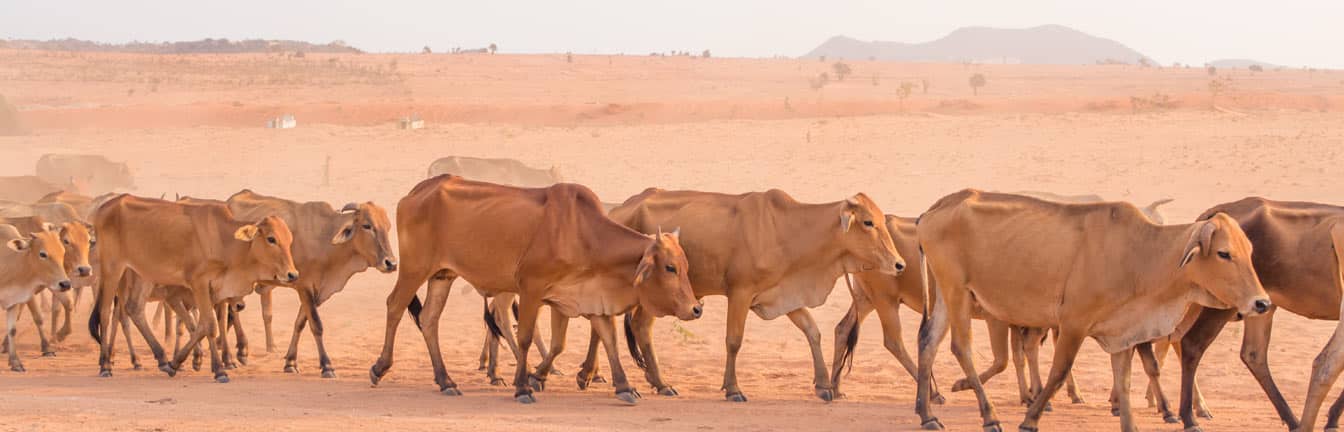
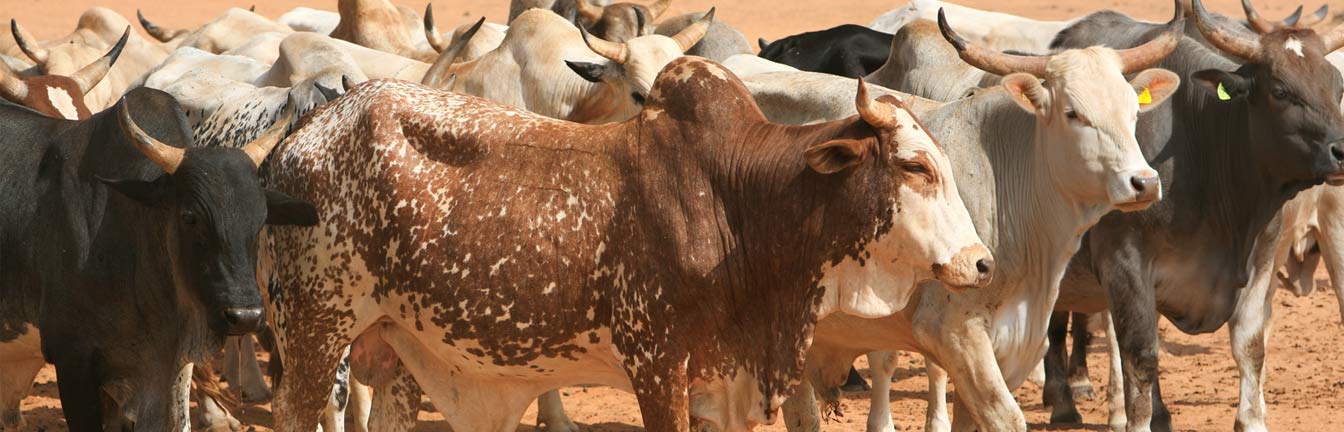
The study compared two tropically adapted genotypes: purebred Brahmans and Tropical Composites (a crossbreed of roughly equal parts Zebu or African Sanga cattle, and European breeds). Among heifers born and raised together, Brahmans carried significantly fewer ticks, worms, and fly lesions, they also exhibited lower temperatures during summer heat. Researchers also noted that the Brahmans had sleeker and lighter coats, tighter navels, and more docile temperament than the Tropical Composites. This last finding ran counter to Brahmans’ reputation and was attributed to the early-life handling they received.
Some traits were passed from the Brahmans to their offspring far more reliably than others, significantly impacting how quickly a cattle breeding programme could integrate them. Coat type and colour were the most frequently inherited traits, while worm burden, body temperature under heat, navel conformation, and temperament were less frequently inherited. Tick and buffalo fly resistance showed the weakest genetic signal, although the authors noted that tick pressure during the trial was unusually light, which may have understated the degree to which that resistance was inherited. Interestingly, the adaptive traits were largely independent of one another and in most cases there was no measurable link between one adaptive trait and the next.
Coat type and fat levels are practical genetic markers
The most commercially useful signal in the study concerns the animal’s coat. In both genotypes, sleeker coats were genetically associated with better body condition. The authors interpret this as evidence that sleek-coated animals shed heat more effectively and so hold condition better through the year. In the case of Brahmans, sleeker-coated specimens reached puberty earlier, although they did so at lighter weights and with less fat cover.
It is also worth noting that sleeker Brahman coats were linked to higher concentrations of insulin-like growth factor, while for the Tropical Composite cattle that relationship was inverted, indicating that findings from one breed cannot be assumed to hold in another.
For both breeds, fatter animals were genetically less able to cope with heat. Those that laid down more external fat ran considerably higher body temperatures in summer. The effect was the same for intramuscular fat, though more strongly pronounced in the Brahmans. Consequently, the Brahman families that produced the highest retail beef yield were also the families whose heifers coped best with heat, which makes that a particularly attractive combination to breed for.
Interestingly, the darker-coated Brahmans tended to be fatter. Worm burden, meanwhile, showed no sign of forestalling growth. Animals carrying heavier worm burdens gained weight as well as their herd mates, particularly among the Tropical Composites.
It is important to note that the genetic correlations reported here rest on a single dataset, albeit a large one. Its results should therefore be read as indicative rather than definitive. The findings also relate specifically to the arid and semi-arid conditions of northern Australia, and the authors are clear that how well cattle adapt will ultimately depend on the local climate, disease pressure, the resistance an animal has already built up through exposure, as well as how the herd has been bred in the past.
Additionally, the genetic link between fat deposition and reduced heat tolerance warrants further investigation, as it may give rise to a potential tension. For instance, those who are trying to actively produce fattier or well-marbled beef may be unintentionally selecting animals less able to regulate their temperature through the hottest months.
Striking the right blend between productivity and adaptability
For producers and investors in arid and semi-arid beef systems, the practical message is that the long-standing fear of a trade-off between productivity and adaptability is not borne out by the data. Selectively breeding cattle for improved growth and reproductive performance may not jeopardise the animals’ capacity to cope with heat, parasites, and seasonal feed stress.
At Farrelly Mitchell, our livestock and agribusiness specialists provide strategic, technical, and commercial expertise to help agribusiness owners and managers make informed decisions and achieve sustainable growth. We advise on the design of cattle breeding programmes by offering insights into genetic selection strategy, herd productivity, and climate resilience. With a proven track record across the livestock value chain, we combine local market insights with global best practices to optimise your operations, address complex challenges, and capitalise on emerging opportunities. Contact our experts today to discuss how we can support your business’ continued growth and profitability.