Rice is an increasingly important staple crop in Africa, providing an estimated 9% of the continent’s caloric intake and playing a crucial role in food security, poverty reduction, and trade. In the past two decades, rice consumption in Africa has skyrocketed, owing to rapid population growth, urbanisation, and changing food preferences. However, domestic rice production in Africa is growing at a much slower rate and is currently supplying just 50-60% of demand continent-wide.
The disparity between rice production and consumption has many societal, economic, and environmental impacts, and has been identified by many African governments as a key threat to long-term self-sufficiency and economic sustainability. This article discusses the future of the African rice sector, identifying the need for increased local production and reduced import dependency. It analyses the challenges that rice producers face, as well as opportunities and strategies for development.
Current state of rice production in Africa
Though rice production in Africa has grown in recent years, the continent remains short of self-sufficiency and is increasingly reliant on imports to satisfy demand. Year-on-year, Africa imports almost 17 million metric tons of rice, incurring a substantial drain on the continent’s foreign reserves. In total, the continent accounts for 32% of global rice imports. As the most populous country in Africa, Nigeria has emerged as both the largest producer and importer of rice, with roughly 34% of the rice consumed in Nigeria being imported into the country.
Rice production in Africa varies greatly between countries. West Africa and Sub-Saharan Africa are particularly reliant on imports, as local production is underdeveloped. Furthermore, rice requires constant irrigation, making it a difficult crop to grow in arid regions or land with poor water management systems. Despite these issues, there are still large areas of arable land suited for rice production that are not being utilised to their full extent.
Africa’s overreliance on imports poses a major risk to food security. According to the FAO, Africa’s external rice suppliers are limited in their scope, with 30% of imports coming from south east Asia and India. This leaves Africa vulnerable to external supply and price shocks. In 2008, a sudden rise in rice prices caused region-wide shortages and an increase in food insecurity. India’s recent rice export ban has caused similar global price rises, harming Africa’s rice supply and further solidifying the need to invest in local production and reduce import dependency.
Challenges faced by producers
Africa’s inability to meet growing demand is primarily due to socioeconomic constraints that limit production capacity, rather than a lack of natural resources. According to the International Rice Research Institute (IRRI), Africa has the highest reserves of untapped natural resources for food production in the world, with over 130 million hectares of land suitable for rice farms. However, more than 90% of this land is currently unused or underdeveloped.
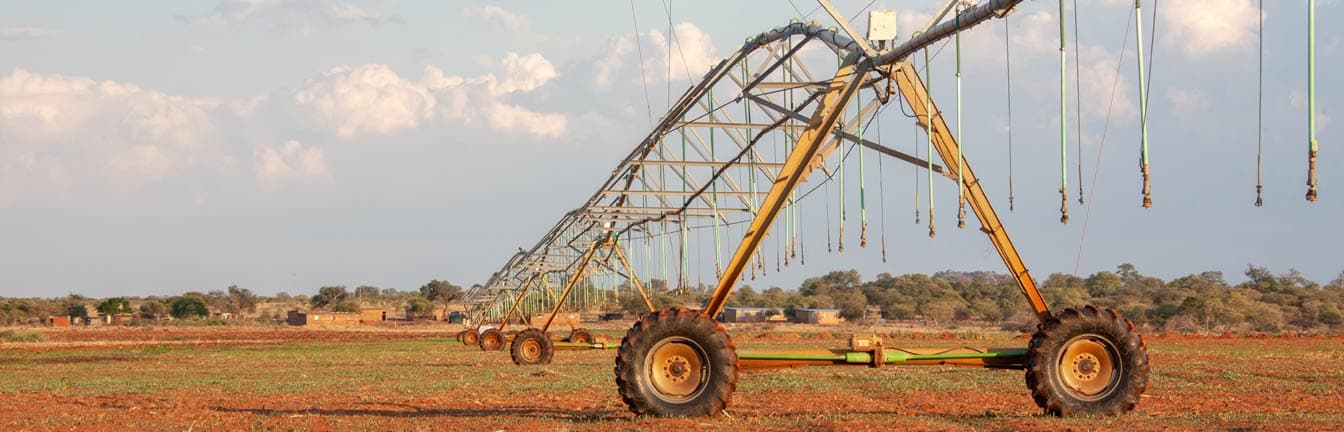
Operational capacity is severely limited by poor infrastructure and management. African farms offer little in the way of innovation and have extremely limited mechanisation. Farms rely on rain instead of irrigation systems, they have outdated production and processing systems, and landholding is often fragmented. Additionally, operational improvements are stymied by lack of access to agricultural credit, lack of supportive regulations, limited market infrastructure, and underqualified labour.
As a consequence of poor funding and limited resources, food loss and waste is rife throughout the rice supply chain. According to IRRI, on-farm and post-harvest rice losses in Africa range from 10% to 30%, due to spillage, pests, poor management practices, postharvest delays, outdated equipment, and low operator skills.
Development strategies
Given the amount of untapped land and underdeveloped farms, it is clear that there is potential for rice production in Africa to improve. Seizing these opportunities will ultimately require support from both local governments and private investors to improve quantity and quality.
The demand for local rice production in Africa is strong. Generally, consumers have a preference for locally produced rice over imported varieties, due to strong cultural ties to early rice domesticators and indigenous heritage. SMEs in this sector present a strategic investment opportunity because they face less competition from foreign markets and have a committed consumer base willing to pay a premium over imported products. For investors, targeting high-potential SMEs with the ability to expand and develop their land as well as upgrade equipment can quickly enhance both yield and quality.
Since the 2008 rice crisis, strategic investment and policies regarding the rice sector have increased significantly. In a bid to achieve self-sufficiency, several African governments have invested heavily in rice production, with the support of DFI’s and NGO’s. In Senegal, rice production has tripled in the past decade, with the aid of the African Development Bank.
Similarly, Nigeria’s recently launched National Rice Development Strategy II has set goals to increase total rice farms from less than 1 million hectares to 2.7 million hectares by 2030 through enhanced irrigation systems. Several African countries have also introduced import taxes to bolster local rice production. In Nigeria, this strategy has seen rice imports from India drop by an estimated 24% from 2021 to 2022.
Foreign direct investment has also proved key, with South Korea recently agreeing to build facilities in Ghana, Guinea, Guinea-Bissau, Gambia, Senegal, Cameroon, Uganda and Kenya to produce rice seeds that better suit local conditions.
Achieve self-sufficiency with actionable insights
The continued growth of rice production in Africa is crucial for food security and the long-term prosperity of the continent. As public and private stakeholders look to invest in the sector, it is crucial that they do so with a comprehensive understanding of the region, its markets, its rural communities, and indigenous practices.
At Farrelly Mitchell, we recognise the strategic importance of rice production in Africa. Our food and agribusiness consultants provide unrivalled expertise on primary production, from crops and livestock to poultry and dairy, and we can deliver actionable insights and strategies to boost productivity, enhance sustainability, and improve food security. We provide on-farm assessments to identify areas for operational improvement and capacity building. Furthermore, we support governments, multilaterals, and DFI’s in designing policies and regulations that support industry growth and enhance food security.