Increasing water scarcity means the marginal return on capital invested in food security in the countries hardest hit progressively shifts away from expanding domestic production and towards systems which guarantee food availability.
Executive summary: For countries reliant on food imports, particularly those in the Middle East and North Africa, efforts to strengthen food security must be based on identifying the right strategic assets for investment.
The most direct source of food availability is a domestic agricultural sector which can supply a country’s needs. However, for countries facing increasing water scarcity, expanding domestic production may be neither economically nor environmentally sustainable. In these cases, the strategic asset required is a system which can source, store and distribute food reliably. Designing, building, and maintaining such a system must be a key strategic goal.
A properly functioning system can offer greater supply chain resilience in the face of rising climate, geopolitical and logistical supply-chain challenges. This will be built on a diversified portfolio of suppliers and commodities, high-quality storage and logistics platforms, including cold chains, and carefully managed inventories.
For countries facing severe constraints on water availability, the limit on domestic food availability is governed by natural resources, not capital. When it comes to allocating that capital, the driver should be guaranteeing food availability rather than maximising domestic production.
Food availability is a system, not a location
In this article we will look at how decisions around investments aimed at ensuring adequate food supplies should be driven by three guiding principles. First, that while domestic production should be maximised, the limit on investment must be set by resource constraints rather than food sovereignty goals. Secondly, food imports need to be diversified as much as possible to remove vulnerabilities caused by concentration risks. Finally, the importance of ensuring adequate stocks of essential foodstuffs are kept on hand in order to buy time in times of crisis.
Food security is defined by the United Nations World Food Programme as having “access to enough safe and nutritious food for normal growth and development, and an active and healthy life.” That definition, correctly, makes no reference to where the required food is sourced. For countries facing the dual challenges of increased water shortages and population growth, there should be a similar ambivalence around the source of food. For example, Egypt’s reliance on Russian wheat (accounting for three quarters of the country’s wheat imports in recent years) has left that country particularly exposed to disruptions in Black Sea shipments.
The World Bank’s 2026 regional assessment for the Middle East, North Africa, Afghanistan and Pakistan projects that food demand across the region will increase by 67% between 2025 and 2050. It also projects that average water availability will fall below the absolute water-scarcity level of 500 cubic metres per person by 2030. With agriculture already accounting for almost 90% of the region’s water use, the traditional approach of increasing food security through greater investment in domestic production will ultimately prove too resource intensive.
In water-stressed countries, the governing principle for investment should be where capital will generate the greatest increase in reliable food availability.
This is not to say that investments in domestic production should be de-prioritised. The World Bank estimates that an additional $12 bn in irrigation and agricultural innovation, accompanied by policy reform, could raise cereal production by three-quarters and more than double fruit and vegetable production.
The objective for policymakers is not to stop investing in agriculture, but rather to recognise the point where diminishing returns on money spent on domestic production kick in.
Capital spending can increase the availability of water, but as the cost of the marginal cubic metre increases, policymakers should keep the distinction between what is technically possible and what is economically rational in mind.
The UAE provides a strong example of the trade-off between food security and food production in water-starved countries. The 2023 Food Systems in the UAE report states that the country imports more than 85% of its food supply, yet agriculture and forestry account for 73% of national freshwater demand. This is not to say that the UAE should not produce any food domestically, and there are advantages to maximising production of water-efficient, strategically important food products from a resilience perspective. It does, however, demonstrate the resource cost that would arise from pursuing self-sufficiency as a policy objective.
The trade-off
The risks facing increased domestic production are completely different from the risks associated with increased reliance on imports.
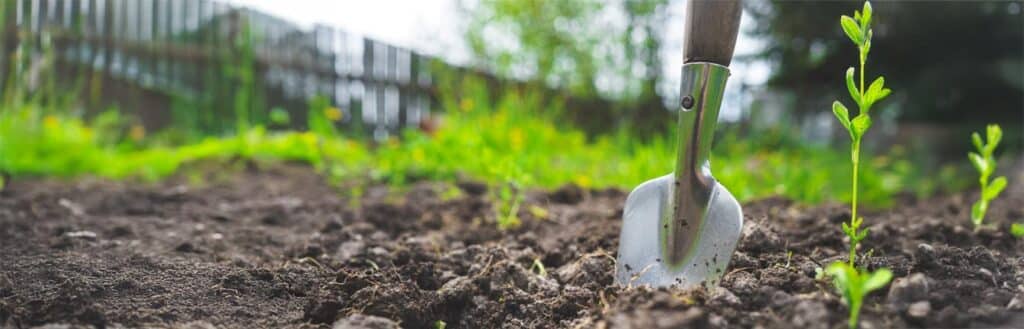
Domestic production faces challenges from extreme heat, water availability and scarcity of land suitable for expansion. Technical solutions such as hydroponics and vertical farming have large ongoing costs. These systems also depend on energy, seed, feed, fertiliser and machinery from suppliers beyond the farm gate.
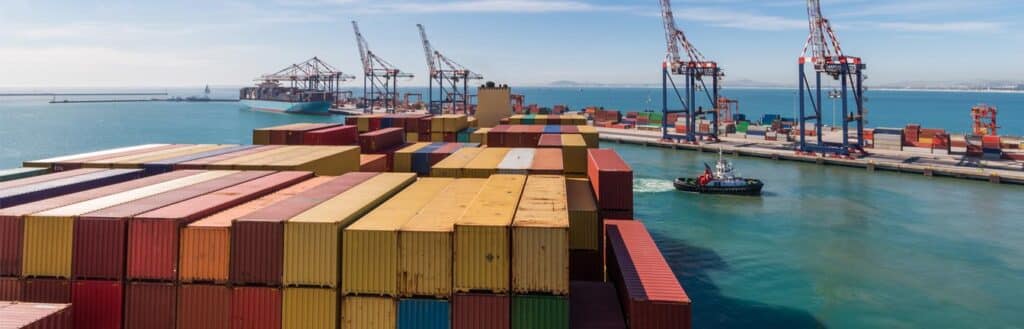
Reliance on imports faces risks from disruptions to shipping, volatility in commodity prices and availability, export restrictions, and concentration of supply from certain countries or regions.
The factors feeding into the decision on whether to invest in increasing domestic production or import resilience are governed by two completely different sets of risks. They both, however, govern the goal of sufficient food availability.
The FAO projects that Saudi Arabia will produce 1.1 mmt of wheat in 2026, while total wheat imports are expected to reach 4 mmt. Those numbers might suggest that the country would benefit from an increase in self-sufficiency. Domestic wheat production, however, faces constraints from groundwater availability, putting limits on how much can be produced economically. The cost of producing each additional tonne domestically needs to be compared with the cost of securing food availability through international procurement, storage and logistics.
Saudi Arabia has had success in attaining self-sufficiency in other key food products such as dates, dairy, eggs and some fruits and vegetables. This points to another decision matrix that has to be accounted for. When it comes to investments in domestic food production capacity, the right kind of production for local conditions is key.
Ireland, for example, is one of the most food-secure nations in the world, but there is no investment in that country in domestic cocoa production, despite the popularity of chocolate.
It is also worth noting that while food self-sufficiency may be close to economic limits in GCC countries, there are large regions, particularly in central and west Africa, where the limits on what can be produced domestically are determined by an entirely different set of challenges. Capital for investment is often constrained, while fragmented domestic infrastructure contributes to food losses.
Despite substantial increases in output since the turn of the millennium, total factor productivity (a measure of how much output is produced from the inputs used) in low-income countries, mainly in Africa, peaked in 2012 and was at its lowest level in 22 years in 2023, according to the findings of the 2026 USDA International Agricultural Productivity report.
Diversification
Choosing the products which provide the best return on investment is critical when the focus is on domestic food production, but when it comes to food availability, choosing the most reliable sources becomes key.
Supply chain resilience is weakest, and the risk from import dependence highest, when supply is concentrated. A country sourcing the majority of an essential foodstuff from a single producer through a single transit route is highly exposed to this risk. Geographic dispersion of food-supply sources will naturally lead to diversification in supply routes. The importing country, ideally, would have more than one port capable of handling shipments, further increasing diversification.
Like any financial investment portfolio, diversification reduces risk.
The UAE’s Food Security Strategy provides a strong template here, calling for three to five alternative sources for each major food category.
For countries which cannot economically replace food imports with domestic production, the goal should be to minimise the chances that an external supply shock involving a single trade partner will lead to a disruption to food supplies to the country’s population.
Buying time
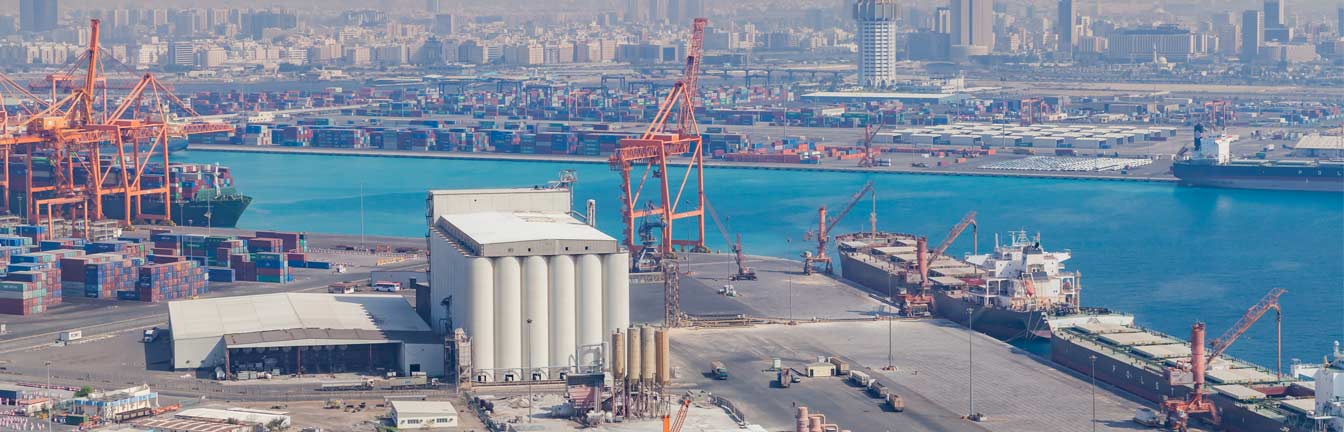
No matter where the food comes from, the ability to store it effectively and move it to where it needs to be to feed people is critical.
Further, the ability to store adequate stocks of food for a population (for months or even years) allows consumption to continue through periods of market disruption. This storage of food is equivalent to a storage of time, allowing authorities to secure alternative supplies, redirect shipments or wait for geopolitical storms to blow over. By supporting supply chain resilience in this way, strategic storage provides a return on investment far beyond its commercial return.
As well as time, having an efficient food logistics system and, critically, a cold chain in place reduces food waste. The UN FAO estimates that more than 14% of food in north and east Africa is lost between harvest and the consumer due to spoilage. Improvements here will lead to increased food availability with zero increase in food production.
The strategic asset
The key question for policymakers deciding where investments and incentives are allocated is identifying the right strategic asset. In some cases, it is about increases in total factor productivity; in others, it is about getting a diversified and resilient import plan in place.
In all cases, it is about ensuring that infrastructure and storage are sufficiently robust to allow food to arrive where it is needed, when it is needed.
Beyond a certain point, attempting to produce more food at home places too much pressure on the natural and economic resources on which long-term food security depends. The goal must be ensuring reliable food availability.
This can be achieved by a food system constructed around complementary assets. Efficient domestic production coupled with diversified import sources are the foundation. Robust supply infrastructure, efficient storage and cold chains which minimise losses, and sufficient strategic inventories, will all build to form that food system. Institutional capacity to coordinate these elements is a requirement to ensure resilience when parts of the system come under pressure.
Ultimately, food security is not determined by where the food is actually produced but by whether enough safe and nutritious food for normal growth and development is readily available. For countries facing increasingly binding natural-resource constraints, the strategic asset is not simply domestic production but rather a resilient food system which connects production to consumption.