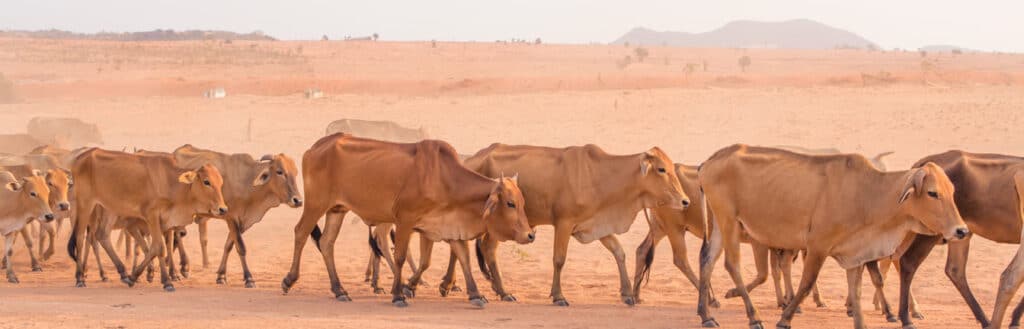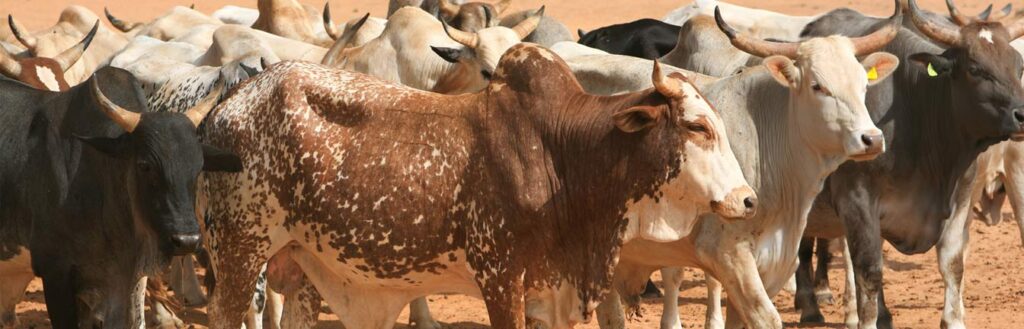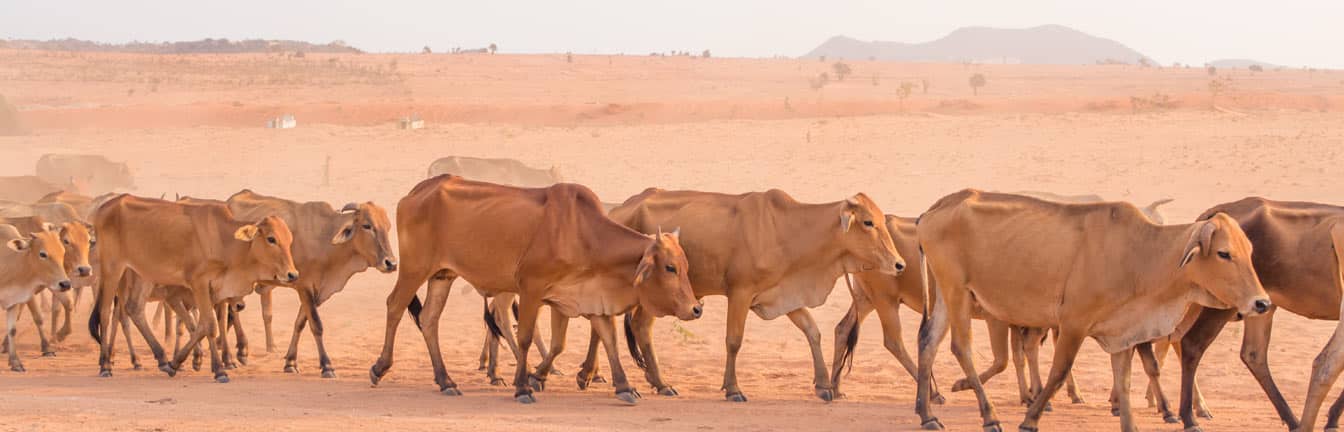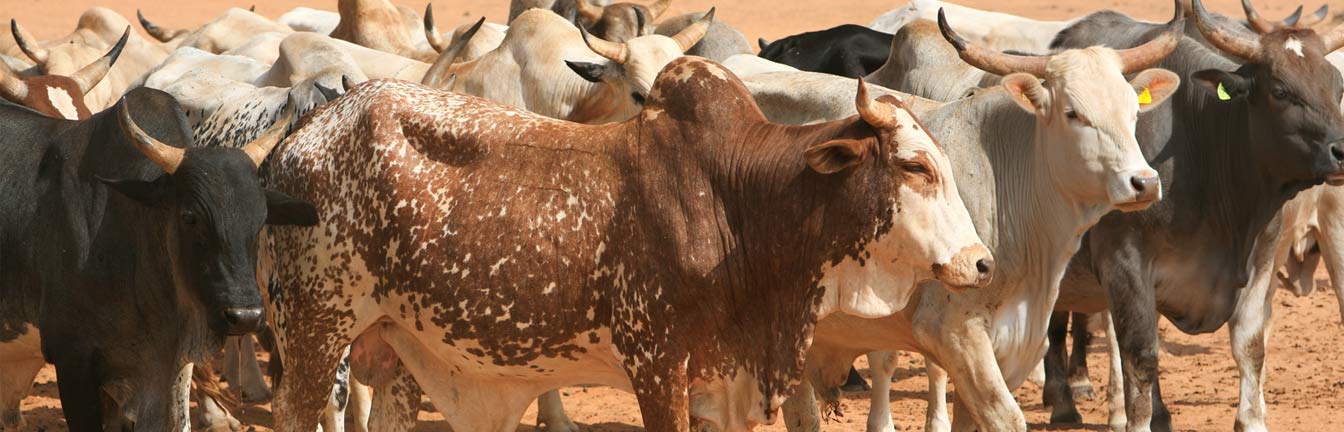
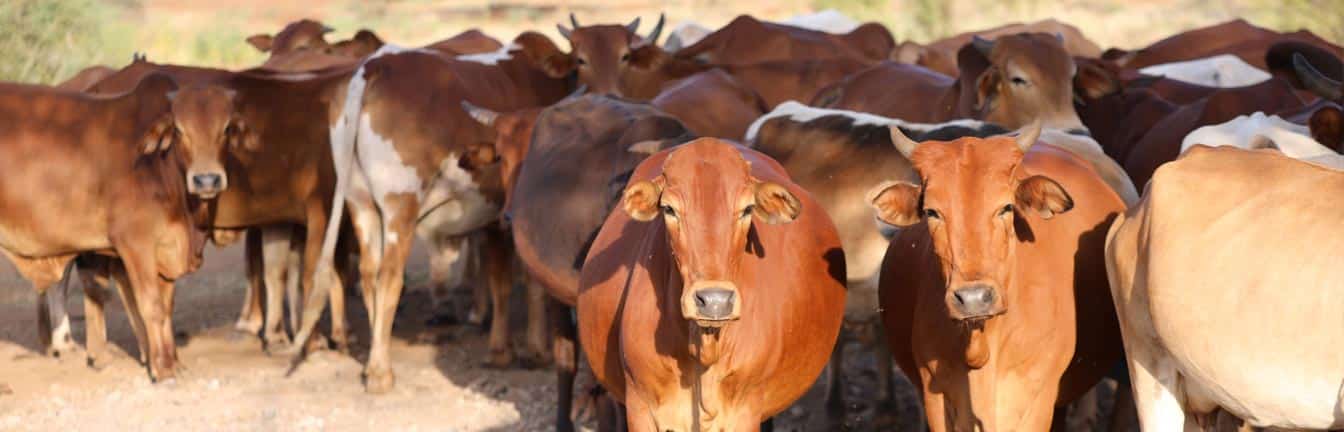
Zimbabwe’s indigenous cattle breeds, the Mashona, Tuli, and Nkone, outperform imported European and Brahman stock under range conditions. That is the central finding of a case study by Ntombizakhe Mpofu, which draws together more than six decades of research into cattle breeds in Zimbabwe at Matopos Research Station. Indigenous cattle rank ahead of exotic breeds on fertility, calf survival, and the weight of calf produced relative to the size of the cow, and that advantage has persisted despite sustained improvements in husbandry and veterinary practice.
A breeding policy at odds with its own evidence
Commercial cattle farming in Zimbabwe has long been built on exotic breeds, as far back as the colonial period, the common assumption has been that indigenous cattle could not support a commercial beef sector. However, in practice, breeds brought in from Europe were poorly adapted and performed well below their expected standards. Concerns about this were raised as early as 1933, and a large experiment was established at Matopos Research Station in 1938 to define a breeding system suited to Zimbabwean ranching.
Early results, reported by Vorster in 1964, indicated that indigenous stocks were superior and concluded that local breeds should form the basis of production in ranching areas. However, his evidence did not substantially change practices. This was mainly due to a lack of a clear national breeding policy and failure by both farmers and researchers to accept the fact that exotic breeds were not adapted to the local environment.
Consequently, by the late 1980s, Mashona, Tuli, and Nkone bulls accounted for only 6% of the bulls used in the commercial beef sector. The prevailing argument was that the environment should be adapted to the cattle rather than the cattle to the environment, so research concentrated on improving pasture, feeding and disease control. By the mid-1970s, it was generally accepted that conditions had improved enough for breed choice to make little difference anywhere in Zimbabwe.
Against that backdrop, a further evaluation programme began at Matopos in 1974, comparing straightbred and crossbred cattle across fertility, survival, growth, feed efficiency and carcass characteristics under the improved management techniques of the day. Animals were raised on natural pastures and supplemented through the winter, and appropriate disease controls and veterinary standards were upheld throughout. But because the comparisons were made under controlled conditions, which use higher inputs than the smallholder and communal systems were likely to provide their findings were unlikely to transfer to those systems.
More recently, results from work at Matopos were presented in several reports written by Ward, Tawonezvi, and Moyo. These reports compared the fertility, survival, growth, and carcass traits of various cattle breeds in Zimbabwe, including Mashona, Nkone, and Tuli cattle with Brahman, Charolais, Sussex, and Afrikaner breeds and crossbreeds.
They found that Mashona cows recorded the highest calving rate at 74%, ahead of Tuli at 69%, Brahman and Nkone at 67%, Charolais at 65%, and Sussex and Afrikaner at 56%. They also discovered that calf survival from birth to weaning was lowest among Brahman and Charolais calves and highest among the indigenous breeds, although the study concedes that the differences between breeds were not statistically significant.
Interestingly, growth patterns ran in the opposite direction. Calves from indigenous cows were the lightest at birth, at weaning and at 18 months, while exotic breeds and their crosses were the heaviest. That difference narrowed over time. Charolais and Sussex cows produced the heaviest calves at birth, but subsequent growth was poor, leaving little difference between the weight of their progeny and that of Afrikaner, Nkone, or Tuli.
Under feedlot conditions, Tuli, Afrikaner, and Mashona cattle performed poorly against Hereford, Aberdeen Angus and Simmental on feed intake, daily gains and feed conversion. However, the study qualifies this by pointing out that economic conditions and unreliable rainfall make it more likely that Zimbabwean beef production will be built around breeds suited to natural range grazing rather than feedlot systems, and in that context local stress-tolerant animals performed best.
Carcass results were similarly mixed. Indigenous breeds and their crosses produced shorter and lighter carcasses than Brahman and Charolais cattle, giving them a low fleshing index and making them unpopular with commercial breeders. They did, however, produce leaner carcasses. The study cites Tawonezvi’s 1993 assessment that the fleshing index is a weak measure of meat production because it rewards large, old, and fat animals and discourages smaller indigenous breeds. This they argued, works against the industry’s own goals of producing leaner meat and improving turnover. A change to the grading system was therefore recommended.
Taken together, the results indicate the superiority of adapted indigenous cattle on fitness traits, including reproduction and survival, and their inferiority on growth, feedlot performance and carcass conformation. The recommendation is therefore a structured crossbreeding approach using indigenous cattle as the dam line, to improve fertility and survival, and exotic cattle as the sire line, to aid growth. This echoes similar recommendations which were made by the same institute in 1964 as well as similar findings in Botswana, Eswatini, Mozambique, Namibia, South Africa, and Zambia. In several of those countries, this has prompted formal indigenous breed conservation work, supported by breed societies. Some breeds have also generated commercial demand at the international level for instance, the Tuli has been taken up by producers in Australia and the United States.
What the evidence on cattle breeds in Zimbabwe cannot yet show
The study is clear about its limitations, most notable that almost all evaluation has taken place under controlled station conditions, and that on-farm comparisons have been constrained by the absence of production records from smallholder and communal herds. Comparisons have also concentrated on biological traits rather than economic returns, so the commercial case for indigenous cattle remains only partly quantified.
What this means for livestock investors and policymakers
For anyone deploying capital into African beef production, the implication is that the choice between cattle breeds in Zimbabwe ought to be determined by the production system. Where animals are reared on natural rangeland and will need to survive and reproduce through drought conditions, the evidence favours indigenous breeds, with exotic sires used selectively to enhance growth.
At Farrelly Mitchell, our livestock experts provide strategic, technical, and commercial expertise to help agribusiness owners and managers make informed decisions and achieve sustainable growth. We advise NGOs, DFIs, government agencies and private sector clients on agricultural policies, animal health and breeding programmes, capacity building, market entry, food safety and traceability systems. With a proven track record across the livestock and protein value chain, we combine local market insights with global best practices to develop your policies, processes and production systems. Contact our experts today to discuss how we can support your programme and help you to capitalise on emerging opportunities.