
Eastern and Southern Africa (ESA) confronts a persistent capital access crisis that constrains economic transformation across multiple sectors. Commercial lending rates routinely exceed 15-20% in markets like Kenya, Tanzania, and Zambia, pricing out the smallholder farmers, SMEs, and infrastructure developers who form the backbone of regional economies.
Traditional banking structures concentrate liquidity in government securities and established corporations, often leaving the agricultural value chains, processing facilities, and last-mile distribution networks that employ millions systematically underfinanced. This financing gap is particularly acutely felt in sectors such as coffee, tea, cocoa, and staple grains, where smallholder producers face seasonal liquidity crunches, lack recognised collateral, and frequently operate within cooperatives that lenders perceive as high-risk and poorly governed.
The consequences are structural. Rwandan coffee farmers historically sold cherries immediately after harvest to local traders at steep discounts because they lacked working capital to purchase, process, and hold inventory until export. Ethiopian smallholders often divert agricultural inputs intended for coffee to food crops because loan repayment schedules don’t align with harvest cycles. Some Kenyan tea cooperatives utilise obsolete processing equipment because banks will not lend without real assets as collateral. Across the region, the mismatch between conventional debt instruments and the reality of agricultural production perpetuates a cycle where producers remain price-takers and value chains remain fragmented.
Shariah-compliant investment structures offer pragmatic alternatives that address the specific bottlenecks constraining ESA’s commodity sectors. While rooted in Islamic finance principles, these instruments function as risk-sharing, asset-backed mechanisms that apply across diverse religious and cultural contexts throughout the region.
How Shariah-compliant investment works
Shariah-compliant finance diverges fundamentally from conventional banking in its treatment of capital, risk, and returns. The prohibition of Riba (interest) means that capital cannot generate returns simply by being lent; it must be deployed in productive economic activity where risk and reward are shared by both entrepreneur and financer. This creates an inherent alignment of incentives which are absent in traditional debt structures.
Rather than a loan with predetermined interest payments, Shariah-compliant transactions take several asset-backed forms. In Musharakah (a joint partnership agreement), the financier and business jointly invest capital in an enterprise, sharing profits according to a pre-agreed ratio, while losses are distributed according to capital contribution. Returns fluctuate with actual business performance rather than accruing independently. In Mudarabah, one party provides capital while the other provides expertise and labour, with profits shared but losses borne by the capital provider unless negligence is proven. This structure naturally suits ventures where entrepreneurs have tangible skills but lack starting capital.
For trade and commodity finance, Murabahah (cost-plus financing) allows a financier to purchase goods or equipment on behalf of a client and resell at an agreed markup disclosed upfront, eliminating uncertainty around compound interest. Salam contracts involve upfront payment by a buyer for goods to be delivered at a specified future date and quality. Crucially, this is structured as a forward sale, not a loan, transferring price risk to the buyer while providing immediate liquidity to the producer.
The unifying requirement across all instruments is asset-backing. Every transaction must be tethered to tangible, identifiable assets rather than purely financial claims. This constraint filters out speculative positioning and directs capital specifically toward value creation in the real economy, precisely where ESA’s financing gaps are most severe.
Practical applications in ESA commodity sectors
Agricultural working capital: The Salam solution
The most immediate application addresses the chronic working capital shortage that plagues smallholder commodity production. Rwanda’s coffee sector provides a validated blueprint. Before structured finance interventions, cooperatives could not afford to purchase cherries from farmers at harvest, forcing immediate sales to traders at discounts of 30-40%. Commercial banks viewed cooperatives as unbankable due to weak balance sheets, poor governance, and lack of traditional collateral.
A Salam-augmented model transforms this dynamic. Export buyers or speciality roasters enter Salam contracts with cooperatives, prepaying 70-80% of expected coffee value for delivery post-processing at specified quality standards. This converts future export receivables into immediate cash without accumulating debt. The cooperative uses these funds to cascade Salam arrangements to individual farmers, offering upfront payments during the lean pre-harvest season in exchange for cherry delivery commitments at harvest. Farmers gain liquidity for inputs, labour, and household needs precisely when cash is scarcest, eliminating distress sales. Cooperatives secure volume commitments and quality compliance through contractual specifications built into the Salam structure.
This nested approach was successfully piloted in Ethiopia and Rwanda through projects funded by the Common Fund for Commodities, demonstrating exceptionally high repayment rates when technical assistance accompanied the financial structure. The Pakistan-based Wasil Foundation scaled similar Salam models with smallholder farmers historically exploited by informal moneylenders, achieving yield improvements of 15–30% as farmers could afford quality seeds and inputs without usurious loans. For ESA’s tea estates in Malawi, cocoa cooperatives in Uganda, and maize aggregators in Zambia, Salam offers a replicable template.
The structure addresses multiple constraints simultaneously. Price volatility risk transfers from farmers to buyers. Quality incentives align throughout the chain since Salam contracts specify grades and delivery standards. Working capital flows in sync with agricultural cycles rather than rigid quarterly repayment schedules. Banks view Salam contracts as additional collateral alongside warehouse receipts and export contracts, potentially reducing loan requirements or improving terms from regional development banks and commercial lenders.
Processing and value addition: Murabahah for equipment finance
Beyond farm-gate production, ESA commodity sectors urgently need investment in processing capacity to capture value currently exported as raw materials. Yet, conventional equipment finance remains inaccessible. Banks demand land titles or existing machinery as collateral, excluding cooperatives operating on communal land or with obsolete facilities.
Murabahah provides transparent equipment acquisition without collateral constraints. The financier purchases specified machinery directly from the supplier and resells it to the cooperative at an agreed markup disclosed upfront. The cooperative repays in instalments tied to processing season revenues rather than fixed monthly schedules that ignore cash flow realities. Unlike conventional loans where interest compounds, the total obligation is fixed and transparent from day one.
Morocco’s participative finance sector, growing 22.9% annually, demonstrates Murabahah‘s viability for trade and equipment finance in African markets. For ESA cooperatives, this structure could unlock processing upgrades that shift value chains from raw cherry or green bean export to washed, graded, and even roasted coffee commanding premium prices. The equipment itself serves as the underlying asset satisfying Shariah requirements, while the cost-plus structure eliminates interest rate uncertainty that makes conventional loans prohibitively expensive.
Infrastructure and aggregation: Sukuk for warehouse networks
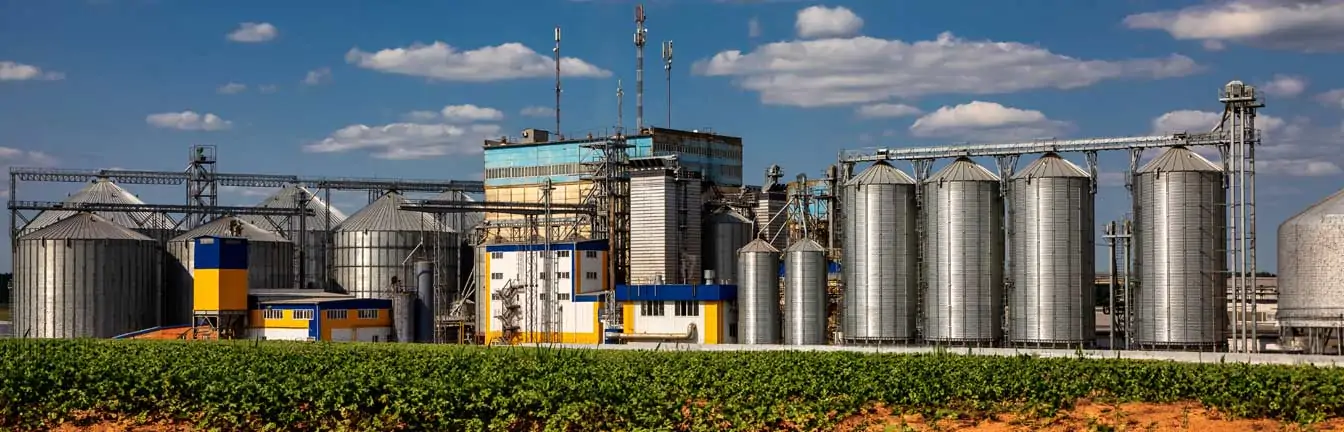
Regional commodity value chains suffer from inadequate storage and aggregation infrastructure, such as controlled humidity warehousing or silos. Financing these assets through conventional bonds saddles governments and cooperatives with debt service obligations disconnected from facility utilisation or revenue generation.
Sukuk (Islamic bonds) represent partial ownership in specific assets rather than debt obligations. Investors receive returns tied to the asset’s productive use rather than fixed interest. Nigeria’s Osun State successfully issued Sukuk for school construction at 6.75% real-adjusted yields, proving sub-sovereign African entities can access this capital.
For ESA, asset-backed Sukuk could finance regional warehouse networks, collection centres, and processing hubs that serve multiple cooperatives. The structure ensures funds are ring-fenced for tangible infrastructure rather than diverted to general budgets. Transparency around asset performance and revenue flows aligns with accountability requirements of development finance institutions increasingly requiring ESG compliance. GCC and ASEAN Islamic finance pools represent untapped liquidity sources for ESA infrastructure, accessible through properly structured Sukuk.
Cooperative strengthening: Musharakah for ownership transitions
Cooperative governance and capitalisation represent persistent challenges across ESA commodity sectors. Members lack capital to upgrade facilities or purchase equity stakes, while outside investors hesitate to engage with governance structures they perceive as weak. Musharakah mutanaqisah (diminishing partnership) creates a path to full ownership while bringing professional management and capital.
Under this structure, a development finance institution or impact investor and a cooperative jointly own processing facilities, aggregation networks, or export operations. The cooperative gradually purchases the partner’s share through operational profits, converting the arrangement from partnership to full cooperative ownership over a defined period. Malaysia’s Maybank Islamic successfully deployed this model for property acquisition; adaptation to commodity infrastructure would allow ESA cooperatives to access capital and technical expertise while retaining control and building equity.
The risk-sharing inherent in Musharakah means losses from market volatility or operational challenges are distributed according to ownership stakes rather than the cooperative bearing full liability. This makes financing viable during the capacity-building phase when cooperatives are developing financial literacy, governance systems, and market linkages, the phase where conventional banks refuse to lend.
Regional implementation pathway
The Rwandan coffee finance experience, documented in studies for the African Coffee Facility under Afreximbank, provides a concrete implementation roadmap. Success factors included technical assistance integrated with financing to build cooperative capacity, warehouse receipt systems providing transparent collateral, export contracts with reputable buyers creating verifiable cash flows, and risk-sharing mechanisms during relationship-building phases.
Translating this to Shariah-compliant structures requires minimal adaptation. Salam contracts replace or complement conventional working capital loans, Murabahah substitutes for equipment leasing, and Sukuk finances shared infrastructure. The underlying architecture (controlled aggregation, quality-linked payments, assigned cash flows, transparent collateral) remains constant. The shift is from debt instruments with fixed interest to risk-sharing arrangements backed by assets, better suited to agricultural realities.
Regulatory standardisation remains a barrier. Unlike Malaysia’s centralised Islamic Financial Services Act, ESA markets lack harmonised legal frameworks for these contracts, increasing transaction costs. However, COMESA’s regional integration agenda creates opportunities for standardised Shariah-compliant instruments recognised across member states, reducing legal fragmentation. Development finance institutions, such as the African Development Bank, the Trade and Development Bank, and regional development banks, are increasingly incorporating Islamic finance windows, providing both capital and technical expertise for structuring.
For ESA’s commodity sectors, Shariah-compliant investment represents not religious preference but pragmatic financial engineering addressing specific market failures. Where conventional banking demands collateral that smallholders lack, Shariah structures anchor on future crop flows and quality commitments. Where fixed repayment schedules mismatch agricultural cycles, profit-sharing and forward sales align obligations with revenue generation. Where speculative capital flows create volatility, asset-backing directs liquidity to productive value chains. The Rwandan coffee model demonstrates that carefully designed structures combining receivables-based finance, controlled aggregation, and risk mitigation can make smallholder value chains bankable. Augmenting this with Salam, Murabahah, and Musharakah offers Eastern and Southern Africa a practical toolkit to bridge the financing gap constraining commodity sector transformation.
At Farrelly Mitchell, we support investors, development partners, and governments in turning high-potential concepts into bankable, scalable solutions. Through our commercial and technical advisory work, including feasibility studies, value-chain analysis, financial modelling, and due diligence, we help stakeholders structure robust, asset-backed investment pipelines suited to Shariah-compliant frameworks. Our food systems and ESG advisory ensure that projects align with sustainability, climate resilience, and responsible investment principles, while our execution support and programme delivery services enable partners to implement models such as Salam financing, asset-based trade structures, and impact-aligned Sukuk with confidence. If you are exploring how to operationalise Shariah-compliant investment across ESA, contact our team to help you design solutions that unlock inclusive growth and long-term value.