The agricultural industry is the cornerstone of the African economy, employing more than 230 million Africans across the continent and representing 35% of GDP. Agricultural production and trade contribute heavily to national economies, but despite this, much of Africa’s agricultural industry is non-industrialised, fragmented, and underdeveloped. Industrialisation is a key indicator of both economic and social development, and agricultural industrialisation is particularly important for developing regions looking to transform their economies, address food security issues, and build more sustainable and resilient food systems.
Agro industrial parks are considered by many agrifood experts and policymakers to be key drivers of agricultural industrialisation and a means of enhancing productivity in a way that benefits all participants. Also referred to as agro industrial zones, or agro processing zones, agro industrial parks serve as production hubs, fostering economic development and innovation, while generating more secure and reliable income for smallholders.
This article will analyse how agro industrial parks can – and in some cases are – modernising and enhancing African agriculture. It will discuss how these parks work, their growing popularity in Africa, and how they can foster self-sufficiency and resilient food systems across the continent.
How do agro industrial parks work?
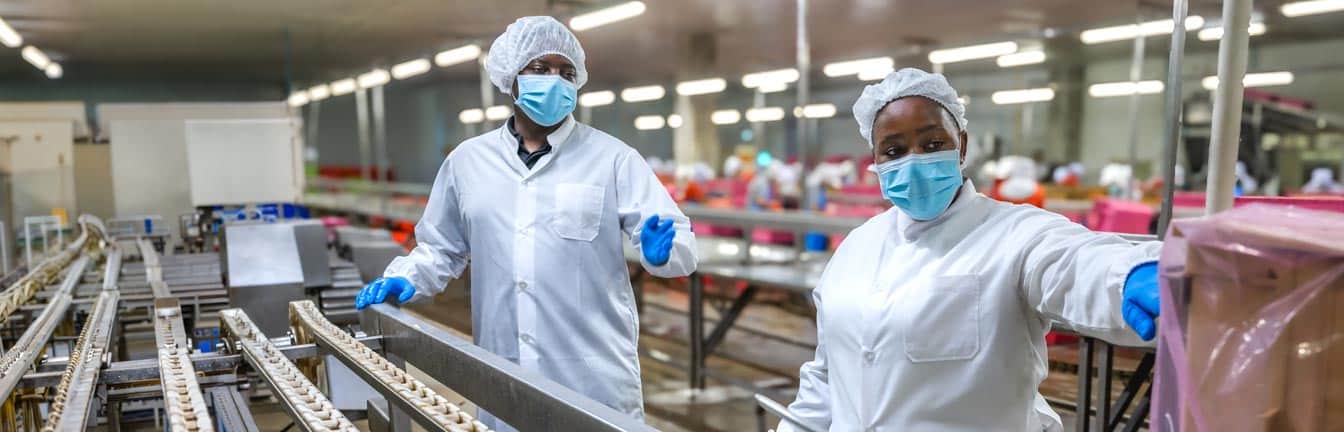
Agro industrial parks are specialised industrial areas dedicated to the production and processing of agricultural products. Often based in rural or peri-urban settings, these well-defined and strategically divided areas of land are usually controlled by a dedicated public-private entity, and consist of producers, processors, and manufacturers, as well as ancillary businesses such as finance, HR, and ICT that support the smooth running of the park.
Agro industrial parks act like a physical network for producers and processors. A place where resources are pooled together for the benefit of all participants. By working in close proximity, businesses can share crucial services such as management, transportation, storage, and packaging. They can benefit from each other, reduce costs, and establish an insulated and self-sufficient path to market.
In many cases, the businesses in agro industrial parks are SME’s, for whom collective action and collaboration allows for greater productivity and opportunities for growth. This is particularly pertinent in Africa, where roughly 80% of food is produced by smallholders who lack the finances and resources needed to enhance their production capabilities. Furthermore, poor linkages between producers and processors has led to African smallholders exporting their raw products, only to buy the processed products back at higher prices for domestic consumption. By combining these processes, agro industrial parks ensure that value addition remains local. This reduces the burden of import/export costs, and offers the opportunity to grow from small-scale subsistence farming to commercialised agriculture.
AIP development in Africa
The popularity of agro industrial parks has grown rapidly in recent years, particularly in low- and middle-income countries where agri-industrialisation in still nascent. The growing consensus amongst governments in these regions is that agro industrial parks can increase value added agricultural activities. Research from the International Food Policy Research Institute (IFPRI) outline several successful examples of agro industrialisation in Africa, including integrated parks in Ethiopia, Morocco, Ghana, Senegal and Kenya, covering industries like horticulture, fisheries, forestry, maize, coffee, and livestock. With dozens of parks either planned or in construction throughout Africa, their influence is predicted to grow in the coming years.
The development of agro industrial parks in Africa relies on effective enabling policies and a blend of public and private institutional support. The majority of parks are managed by public-private partnerships (PPP’s), allowing governments and private sector stakeholders to work together and share associated risks and returns. Many agro industrial parks also leverage financing from development finance institutions (DFI’s) and multilateral development banks (MDB’s). The recently formed “Alliance for Special Agro-Industrial Processing Zones” (ZAPZ) represents one of the largest ventures in this sector, bringing together the African Development Bank, Afreximbank, Islamic Development Bank Group, and UNIDO. This group aims to invest $3 billion to develop rural African areas into agro-industrial zones.
Toward self-sufficiency
Building self-sufficient, sustainable, and resilient food systems is a long-term priority in Africa. Though agro industrial parks are not a complete solution to these challenges, they can contribute significantly.
Agro industrial parks can play a pivotal role in empowering smallholders by facilitating their integration into larger markets. These parks provide access to advanced tools and support from larger enterprises which drastically increases the efficiency and productivity of small-scale farmers. Moreover, access to R&D, within agro industrial parks enables smallholders to innovate and improve, leading to an increase in their overall output.
By clustering smallholders together, agro industrial parks also foster collective bargaining and strengthen the negotiating power these farmers when dealing with suppliers, buyers, and financial institutions. This collective approach enhances their ability to secure better prices, access funding, and negotiate favourable terms, ultimately improving their economic sustainability and market presence.
By concentrating resources and buying inputs in bulk, agro industrial parks can reduce overall input requirements and costs. This is both economically and environmentally responsible, as it reduces waste, particularly from potentially harmful pollutants such as pesticides and fertilisers. In some instances, circular practices have also been introduced within agro industrial parks, with byproducts such as manure from one farm being repurposed as biofuel for a processing plant, or organic fertiliser in a neighbouring farm.
Another way that agro industrial parks support sustainability is through focused R&D investment. Parks can serve as centres for developing and implementing climate mitigation and adaptation technologies and practices, tailored specifically to the regional context in which they operate. For instance, in arid regions, R&D efforts might focus on drought-resistant crops and efficient water management systems, while in more fertile areas, the emphasis could be on sustainable pest control and soil conservation techniques. By integrating local knowledge with scientific research, agro industrial parks can not only improve the resilience and productivity of agriculture in their respective regions but also play a pivotal role in addressing broader environmental challenges.
Supporting industrialisation
At Farrelly Mitchell, our expert agribusiness consultants recognise the importance of agro industrial parks in Africa. We have a deep understanding of African food systems and their inherent challenges and opportunities.
We offer a range of supports to both public and private stakeholders, including businesses, governments, NGO’s, DFI’s, and private investors. Our food policy and feasibility consultants help policymakers build robust regulatory frameworks and business cases that facilitate institutional development, investment, and innovation. Meanwhile, our African food and agribusiness experts can assess processes and operations, manage supply chain partnerships, and identify ways to improve efficiencies and maximise productivity.
To establish resilient, sustainable, and self-sufficient food systems in Africa, contact us today.