
Background
The client for this project was a major global trading company with business interests spanning energy, machinery, chemicals, food, textiles, logistics, and finance. Through its nutrition and agriculture business unit, it has been building a portfolio of innovative food production technologies, including controlled environment agriculture.
Its agri-innovation team had identified a potential investment in a European aeroponics technology provider founded in 2018. The client’s global reach and long-term investment approach position it to help promising food technologies scale across markets.
Problem
Indoor growing has attracted significant investment worldwide, promising automation, year-round supply, pesticide-free crops, and production close to urban markets. Yet the industry remains at a developmental stage, with high energy costs, heavy capital requirements, scarce agronomic skills, and the complexity of scaling across sites, and no platform has achieved clear commercial dominance. The target is a case in point: it had built a research facility, an initial production site with 30 small-format towers, and plans for a greenfield site of over 10 hectares backed by an offtake agreement with one of its home market’s largest supermarket chains. For the client, these trends presented both an opportunity and a challenge.
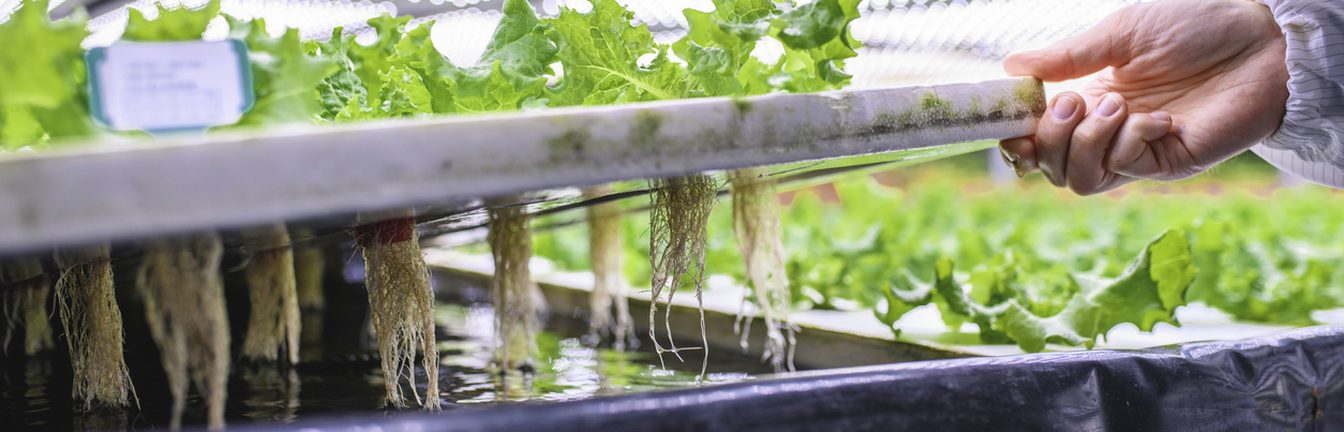
Despite the target’s progress, including over €10 million invested in research and development since 2018 and a further €20 million planned, the client lacked independent validation of its technology. The aeroponic system, which sprays nutrient solution onto roots inside a sealed, insulated structure, had not been proven at commercial scale. Much of the hardware and all of the software had been developed in-house, including two tower formats, a patent-pending tube ventilation design, patented extendable trays, low-pressure sprinklers, and a three-tier operating system. The target offered its system through co-investment and licensing models, so the client needed to know whether the technology could deliver consistent yields, quality, and efficiency at scale before investing. Backing an unproven platform risked exposure to costly performance gaps.
Solution
Farrelly Mitchell was engaged to conduct a technical due diligence of the target across five integrated workstreams. Our task was to rate the engineering, the code and the cultivation know-how against the best in the field. In doing so, we:
- Visited the R&D facility and the first commercial farm, which was not yet operating.
- Met management, technical teams, and the two key equipment suppliers.
- Reviewed facility design, cultivation, air distribution, and automation.
- Rated 25 components across agronomy, hardware, software, and integration.
- Assessed system integration, control models, and data analytics.
- Benchmarked yields and resource use against industry standards.
- Reviewed training, technical support, and operating procedures.
- Profiled the fertigation, seeding, and harvesting line suppliers.
- Benchmarked the target against four leading vertical farming companies.
Impact
The technical due diligence delivered by Farrelly Mitchell provided the client with an evidence-based foundation for its investment decision, identifying no critical red-flag issues and giving it the confidence to continue evaluating the opportunity.
The facility design review produced an overall technology rating of 3.5 out of 5, reflecting proven technologies combined with innovative research and development not yet tested at multi-site scale. Proprietary hardware, including the box-in-a-box structure, patented extendable trays, and air tube distribution, scored 4 out of 5 as very innovative but not yet commercially proven.
The integration review found that the in-house software and system integration gave the target an advantage in data capture and operational control. It flagged the system’s vulnerability to water contamination as a high-priority issue, recommending disinfectants in the nutrient solution, alongside a water cleaning system for drain and return solution and seed coating to support automated seeding.
The support functions assessment highlighted the critical challenge of sourcing and training skilled agronomic and technical staff as the business scales, and recommended introducing a manual crop scouting team operating three times a week.
The supplier and competition review showed that core technology across the industry was broadly similar, with research and development and business model the key differentiators. The target’s technology-provider model set it apart, and its cost per square metre was significantly lower than that of leading international peers, but its leafy green yields of 30 to 60 kilograms per square metre a year trailed the 50 to 90 achieved by its peers, although yields depend heavily on crop configuration.
Forge ahead with Farrelly Mitchell
In sum, the engagement equipped the client with a clear view of the platform’s strengths and the operational risks to manage as it moves to commercial scale, offering a blueprint for investors evaluating proprietary agtech platforms before they are proven at scale. It also shows how the rigorous, data-driven due diligence we deliver at Farrelly Mitchell supports high-value investment decisions. Our global presence and deep local market expertise enable us to provide insights that go beyond surface-level market overviews to deliver genuinely actionable strategic guidance.
Our comprehensive suite of advisory services includes technical due diligence, technology assessment, feasibility studies, investment advisory, and controlled environment agriculture advisory. To explore how Farrelly Mitchell can support your organisation’s strategic objectives in food and agriculture, wherever you operate, contact our team today.

