
Background
The client for this project was a sovereign-backed agricultural investment company with a mandate to strengthen food security at home and globally through strategic investments in agriculture and agribusiness.
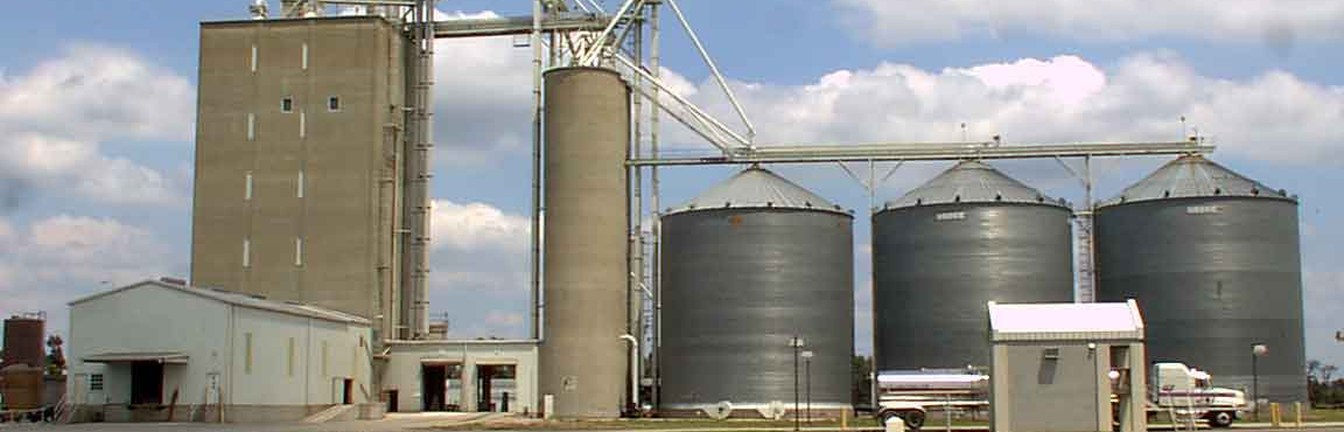
In this engagement, the client was considering an investment in an animal feed and grain group with 12 sites. Four, in northern Europe, produced plant protein, forage, and pellets. Eight, in its home market, included a large feed mill with a port terminal, a network of barley bagging stations, and a new grain terminal under construction, with another in planning.
Problem
Animal feed and grain logistics are essential links in the global food chain, connecting crop production with livestock farmers and food manufacturers. Investors are drawn to integrated platforms that combine processing, storage, and port infrastructure, but their value depends on assets operating safely at the capacity their business plans assume. The target is a case in point. Its plans forecast growth of 33% a year at its feed mill between 2025 and 2030, while many of its European plants had only just been commissioned and two port terminals were still being built or planned. For the client, these trends presented both an opportunity and a challenge.
Despite the target’s scale and strategic assets, the client needed independent evidence that its projections were achievable. It needed to know whether each site had the capacity to deliver the forecast volumes, what investment would be required, whether site standards were adequate, and whether projects under construction were on track. Without this, it risked investing on the basis of volumes the assets could not deliver.
Solution
Farrelly Mitchell was engaged to conduct technical due diligence on the target. Our brief was to check how much the group’s facilities could really handle, and what it would cost to close any shortfall. To build that picture, we:
- Reviewed data in the virtual data room and flagged gaps.
- Visited 12 sites across northern Europe and the target’s home market.
- Assessed capacity, utilisation, and headroom at each site.
- Compared practical capacity with business plan volumes.
- Reviewed planned and required capital expenditure.
- Assessed operational, food safety, and health and safety standards.
- Reviewed construction progress at the grain terminal projects.
- Rated material findings and red flags.
Impact
The technical due diligence delivered by Farrelly Mitchell gave the client a clear, site-by-site view of the target’s assets and a realistic assessment of its business plan.
The review found the feed mill to be a high-quality asset, but one producing under 300,000 tonnes in 2024 against a reported capacity of 1.5 million tonnes, a utilisation below 20% driven by weak sales. Management’s capacity expectations were also overstated, as they assumed 365 operating days rather than a standard 330, and pellet press efficiency was below its theoretical level. On the business plan’s growth forecast, the mill would exceed its practical capacity by 2029, so the plan could not be achieved without a capital expenditure programme.
The barley stations operated efficiently, with low losses, but their throughput had fallen by 21% a year between 2021 and 2024, with average utilisation of about 23% over 2021 to 2030, including forecast years, and just 27% by 2030. As farmers shifted to compound feed, Farrelly Mitchell saw an opportunity to consolidate the stations, and flagged that new rules banning open-air storage could require significant investment. In Europe, the plants were still in start-up, and a bottleneck at the protein plant meant its forecast throughput could not be reached with the current set-up.
The review identified four red flags requiring urgent attention. Project management at the grain terminal under construction was weak, with cumulative delays of 384 days. At the feed mill itself, the fire detection system had been bypassed and bucket elevator tracking sensors had been disconnected. Fire safety at four barley stations was also inadequate, with no functioning fire pumps or fire certificates. The business plan also lacked granularity on raw materials, finished goods, and storage. It also reviewed the planned terminal, for which over USD 10 million of equipment had already been procured.
Forge ahead with Farrelly Mitchell
Taken as a whole, the engagement equipped the client to negotiate and plan with a realistic view of capacity, capital needs, and risk, offering a blueprint for investors assessing multi-site agribusiness platforms and showing how the rigorous, data-driven due diligence we deliver at Farrelly Mitchell supports high-value investment decisions. Our global presence and deep local market expertise enable us to provide insights that go beyond surface-level market overviews to deliver genuinely actionable strategic guidance.
Our comprehensive suite of advisory services includes technical due diligence, capacity and capital expenditure reviews, health and safety assessments, business plan validation, and transaction support. To explore how Farrelly Mitchell can support your organisation’s strategic objectives in food and agriculture, wherever you operate, contact our team today.

