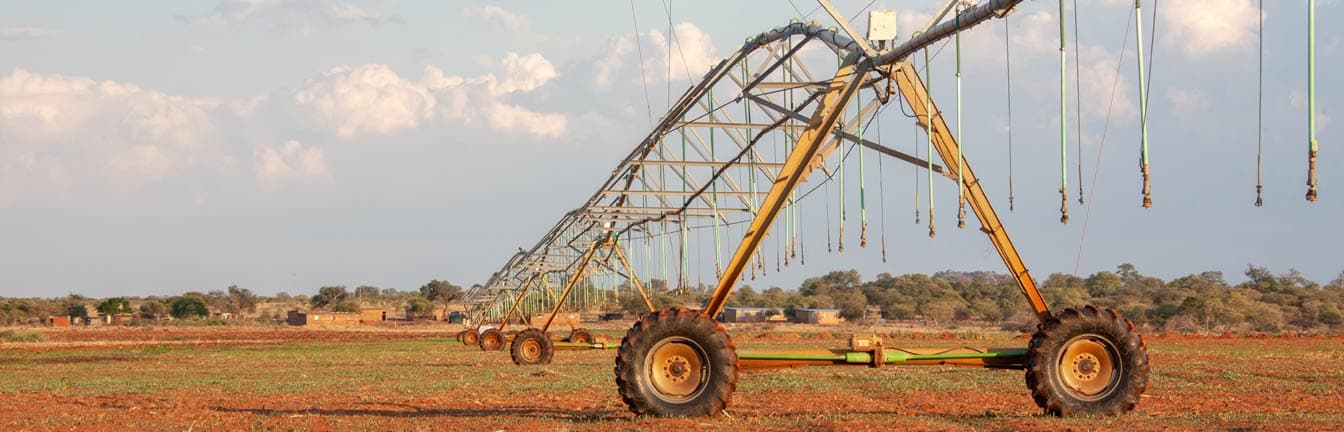

A “Green Revolution” similar to that of India’s in the 1960’s is often suggested as a solution to Africa’s food insecurity problem. The main goal of the Green Revolution was to ensure India’s food security, specifically in improving the country’s food grain production.
Although progress was made in terms of increasing grain yields, India ultimately failed to provide food security for their population, and the revolution brought further issues to the fore. An agricultural revolution in Africa, although no doubt desirable, should take on board the lessons of the past in India, so as to forge better outcomes.
The Issues with India’s Green Revolution
Since the Green Revolution, India’s crop productivity has significantly improved, making the country one of the world’s largest grain and rice exporters. However, questions remain as to the success of the revolution in terms of food security, welfare, and quality of life. Despite large increases in production volume, overall food availability has barely increased due to the population almost tripling since the 1960’s. Per capita net availability jumped from 144 kg per year in 1951 to 171 kg in 1971 largely due to greater availability of wheat, but over the last 50 years has fluctuated between 170 and 180 kg.
Increases in yields have not resulted in corresponding decreases in malnutrition, with one quarter of all those malnourished in the world living in India. The country ranks 94th of 107 countries in the 2020 Global Hunger Index and roughly 14% of the population is undernourished. India is also experiencing rapid increases in cases of overnutrition, due to an excess in the consumption of calories and lack of variety in their diets. Today, agricultural households account for many of the extreme poverty cases in India, with many farmers also encountering crippling debt and severe mental health issues. In recent months changing government policies in India have sparked outrage from farmers with huge farmer protests taking place. Alongside these problems, the green revolution has exacerbated many of the negative environmental impacts of agriculture in the region, including:
- Loss of soil fertility
- Soil erosion
- Soil toxicity
- Diminishing water resources
- Pollution of underground water
- Salinity of underground water
- Increased incidences of human and livestock diseases
- Climate change
Addressing food security in Africa
While the Green Revolution in India led to increased grain production and export capabilities, it failed to significantly enhance food security or quality of life, highlighting the need for Africa to learn from these outcomes to achieve more sustainable and equitable agricultural advancements.
At Farrelly Mitchell, we support governments, NGOs, DFIs, and businesses in developing more productive agricultural outcomes, particularly in developing nations. We strive to make our solutions practical, effective, and sustainable, ensuring that the projects, policies, and initiatives we work on are successful in the long-term. For strategic support in programme design and policy development, reach out to our team today.