Micropropagation, also known as plant tissue culture, is a propagation technique used for cloning plants. It bridges gaps in traditional agriculture, helping to overcome disease cycles, speed up multiplication, and ensure uniformity at scale.
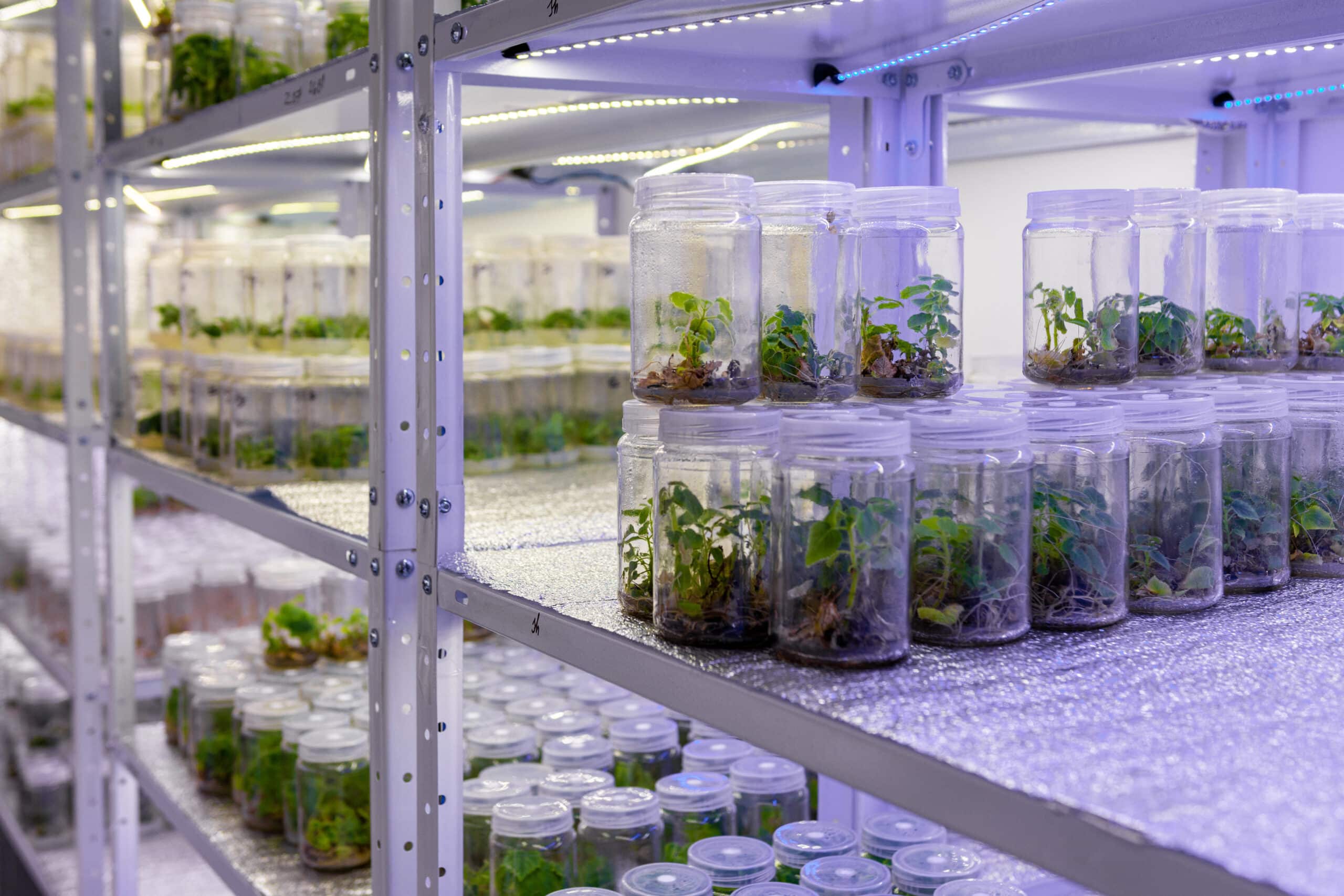
The technique involves taking a tiny piece of a plant (like a shoot tip or even just a few cells) and growing it in sterile nutrient gel or liquid until it forms a new plant. This happens under regulated light, temperature, and sterile air. As everything happens in a controlled lab, growers can produce thousands of identical plants in a very short time and in a very limited space, all year round, regardless of seasons or climate. This creates uniform plants that can then be transferred to the field when needed, and when properly implemented, it can amplify productivity and resilience.
Advantages of micropropagation
Micropropagation offers several compelling benefits. One of the biggest advantages is the ability to produce massive numbers of plants. Traditional methods (like cuttings or seeds) might yield only dozens or hundreds of new plants in a season, whereas micropropagation can yield thousands from just a small tissue sample. This high level of fecundity means agribusinesses can get yielded crops to market much faster than via conventional propagation.
Micropropagation is also quick. Once an initial plant is grown, micropropagation can quickly multiply it for commercial planting in a fraction of the time it would take to propagate plants through traditional methods. This also enables rapid introduction of new varieties or high-performing elite cultivars. This agility can be a significant competitive advantage, allowing companies to respond faster to market trends, such as a high demand for specific breeds or variants.
Another advantage is that micropropagation can produce clean, disease-free plants in a way traditional propagation often cannot. In the lab, plants are grown in sterile conditions from carefully selected disease-free parent tissue. This results in plantlets that are free from viruses, fungi, and bacteria that may plague field-grown stock. This has the added benefit of reducing the need for agrochemicals. If plants are grown in sterile conditions and are pathogen-free, farmers require fewer fungicides. For example, in the banana industry, using tissue-cultured plantlets has significantly reduced the incidence of diseases like Fusarium wilt and Banana Bunchy Top Virus.
Similarly, micropropagated plants should result in lower crop losses, more vigorous crops, and higher yields. Since all plants are genetically identical clones produced under controlled, pathogen‐free conditions, they often establish faster, grow more uniformly, and lead to higher yields. Their uniformity and genetic stability mean that they can also take full advantage of inputs (water, fertiliser, etc.) and reach their full genetic potential faster. Moreover, as these plants are typically derived from carefully selected donor plants, they often exhibit strong early development, which can shorten crop cycles or allow additional planting cycles per year. For processors and exporters, having a crop where all plants grow at a similar rate and produce a similar product means predictable harvests and consistent quality. This can also help producers meet strict market specifications such as uniform size, colour, or texture.
Micropropagation also has several sustainability benefits. Firstly, producing more plants in a controlled environment can reduce pressure on land resources. Likewise, by using fewer inputs like water, fertiliser, and pesticides, micropropagated plants help minimise agricultural environmental impacts and alleviate the strain on critical resources.
Additionally, micropropagation can contribute to conservation efforts as rare or endangered plants can be multiplied without harming wild populations. Superior cultivars can be propagated in vitro and then reintroduced, thereby supporting long-term biodiversity conservation.
Another positive impact of micropropagation relates to quality assurance and brand reputation. By using micropropagated plants, producers can achieve more uniform crop performance across different locations, front-load quality assurance, and make it easier to enforce quality standards. Over time, this uniformity will strengthen a company’s brand, and consumers will notice that a branded fruit or plant product is always of high quality.
For some agribusinesses, micropropagation itself can become a business line. Companies that develop expertise in micropropagation can transform this capability into a separate revenue stream by producing surplus plantlets for sale to other growers and converting a cost centre into a profit centre. The market for tissue-cultured plants is large and growing. In India, for example, the tissue culture industry has grown into a multi-million-dollar enterprise, with around 200 commercial labs producing hundreds of millions of plantlets annually for various crops, including orchard rootstocks, vegetable seedlings, and ornamental flowers.
Disadvantages of micropropagation
Despite its clear benefits, micropropagation also has notable drawbacks and challenges. Firstly, setting up and running a micropropagation facility can be expensive. In addition to specialised equipment (like growth chambers and lab supplies), highly skilled labour is needed to perform the required laboratory work. Our research has shown that labour alone can make up 50–70% of micropropagation production costs. Moreover, finding and retaining employees with the necessary expertise can be challenging, especially in remote areas.
Quality control can also prove challenging, as maintaining sterile conditions, ensuring consistent growth rates, and preventing contamination requires constant vigilance. Even minor variations in media composition, temperature, or light exposure can impact plant development. While automation and bioreactor technologies can simplify and improve this process, fully automating plant tissue culture is not yet feasible, and some level of human involvement is inevitable. Ultimately this means producers need to develop detailed, specific, and standardised protocols and documentation systems, all of which consumes considerable time and resources.
The cost of micropropagation means that it is not economically viable to propagate many crops or plant species using this method. With large-scale volumes of high-value crops, it is more likely to justify the investment required.
Producing identical plants eliminates genetic diversity and “herd immunity”. With genetically identical clones, a pathogen that affects one plant can potentially devastate an entire crop. It is therefore wise that enterprises employing micropropagation should implement risk mitigation strategies, such as developing multiple varieties of a given plant and prioritising disease-resistant lines.
The ability to acclimatise to harsher conditions can also prove challenging for some micropropagated plants. After the lab, the small plantlets will need to be transferred to the soil and grown to a hardy size. This hardening phase usually happens in greenhouses or nurseries, but not all lab-grown plantlets survive this transfer, and those that do may require special attention and careful handling. This may also require significant investment in appropriate greenhouse infrastructure and the development of specific acclimatisation protocols, which adds costs and operational complexity, particularly when done at a large-scale commercial level. Producers should also be mindful that some biological limitations exist, with some plant species particularly resistant to tissue culture techniques, in vitro rooting, and ex vitro hardening.
Driving profitability and sustainability with micropropagation
Micropropagation is a strategic tool. Ultimately, the decision to adopt micropropagation must be carefully evaluated against specific agricultural objectives. When used effectively, micropropagation can sustainably increase agricultural productivity, reduce dependence on external nurseries, eliminate supply bottlenecks, and enable rapid growth at scale while maintaining high standards of quality.
In practice, producers will typically use a hybrid approach, combining micropropagation for what it does best (rapid, clean multiplication) with more economical conventional methods for final scaling or seed production. For agribusiness leaders, the key is to apply micropropagation in the right contexts; those who do so can gain a significant competitive edge, ensuring that their operations are profitable, resilient, and well-positioned for sustainable long-term growth.
At Farrelly Mitchell, our food and agribusiness consultants can provide expert knowledge in controlled environment agriculture, sustainability, ESG, and agtech practices. We help clients improve their operational efficiency by providing critical insights and actionable recommendations into micropropagation, regenerative agriculture, agribusiness strategy, crops, and much more. To discover how we can support your organisation, contact us today.