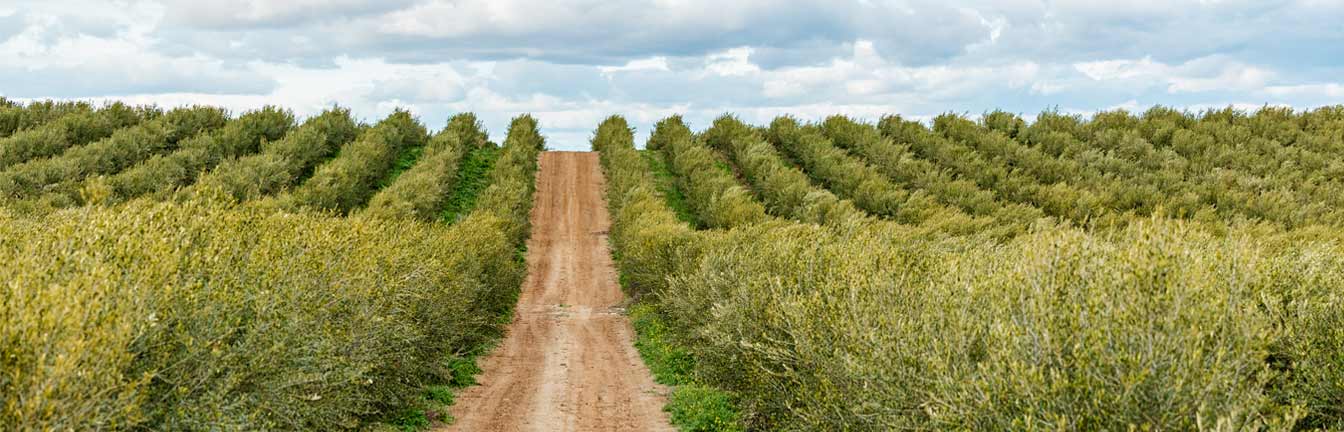
The attractiveness of large scale land aggregation is waning, perhaps signalling the end of a strategy that has dominated agricultural asset management for decades. Originally adapted from the institutional timberland and commercial real estate playbooks of the late 20th century, this model was predicated on the thesis that fragmented, family-owned farmland could be transformed into institutional-grade assets through aggressive consolidation and standardisation. This approach achieved great success in the row-crop belts of the United States and the permanent crop orchards of California’s Central Valley, where scale directly correlated with greater operational efficiency. Ultimately this model was transported to the Iberian Peninsula, where the first wave of institutional investors were able to capitalise on a straightforward arbitrage: acquiring rainfed smallholdings, converting them to super-high density (SHD) irrigated systems, and capturing the enhanced returns these systems generated across long-term holding periods.
However, as this market matures and commercial growers face increasing pressure from consolidated retailers who demand year-round supply and price stability, a second investment phase has emerged. In this phase producers are trying to become more vertically integrated, with savvy institutional ag-investors moving to control processing, packing, and distribution in order to defend valuations and secure better and more stable profit margins.
This transition reflects a fundamental shift in agricultural investment economics. Standalone farms, regardless of their scale or efficiency, remain vulnerable to commodity price volatility and the negotiating power of concentrated retail buyers. The olive oil sector provides a stark illustration of this vulnerability, where record price spikes have simultaneously enriched upstream producers whilst squeezing the margins of downstream growers who lack their own means of production.
In contrast, investors who control a larger portion of the value chain are better placed to capture margins across multiple stages of production. This structural advantage translates directly into valuation premiums, with integrated agribusinesses commanding enterprise value multiples of two to three times higher than standalone farming operations.
The economics of vertical integration
The more traditional approach to agricultural investment treated farmland primarily as a real asset play. Land aggregation strategies were based on acquiring dozens or hundreds of fragmented, family-owned farms on neighbouring plots and consolidating them into large-scale operations that could be leased to large commercial farmers, often converting traditional rainfed farms into SHD irrigated systems at the same time.
Then all that was required was for the organisation to wait for the trees to reach full bearing and for yields to stabilise. This strategy generated attractive returns during a period of rising land values and relatively stable commodity markets. The conversion from rainfed to irrigated systems alone often created significant capital appreciation, with developed irrigated olive groves sometimes trading at approximately twice the value of dryland equivalents.
However, this model has several structural constraints. It exposes investors to the volatility of commodity markets, leaving them dependent on upstream and downstream supply chain partners. Perhaps most critically, it fails to meet the evolving requirements of many European supermarket chains, who increasingly demand guaranteed year-round supply and price predictability that standalone farms cannot provide.
The consequences of remaining purely upstream have become evident in transaction markets where many land aggregators have faced divestment challenges. This trend looks set to continue as both downstream processors without production assets and upstream growers without secure processing capabilities face significantly greater risks than integrated competitors. As a result, many institutional investors are now prioritising vertical integration as they try to gain control over the entire value chain. This transition marks the rise of an industrial model in which the farm functions simply as the production arm of a larger processing or manufacturing business.
Structural implications for investors and acquirers
The shift from land aggregation to vertical integration carries significant strategic implications. The most immediate being the revaluation of what constitutes an attractive acquisition target. During the initial phase of the roll-up strategy, investors prioritised acreage, water rights, and agronomic potential. Land with secure irrigation and suitable soil profiles commanded the highest premiums, whilst factors such as proximity to processing infrastructure or existing commercial relationships received less attention.
In the new phase, integration capability and commercial infrastructure have become the determining factors in asset selection. Properties with existing packing facilities, export licences, or established relationships with retailers represent more valuable and scalable, targets than those with the best raw agricultural land. This reflects a broader shift in risk assessment.
Many traditional production risks regarding crop cultivation and yield optimisation can be addressed using SHD systems and precision agronomy. The residual risks are now predominantly commercial: securing market access, managing volatility, and defending margins against powerful retail buyers.
Recent merger and acquisition activities seem to be reflecting these priorities as transactions increasingly focus on assets with industrial infrastructure. Packing facilities, cold storage, processing plants, and logistics networks now feature prominently in due diligence processes, with technical assessments of these facilities often receiving the same level of consideration as the agronomic evaluations of the land itself. Commercial valuations increasingly reflect the presence or absence of these capabilities, with commercially ready facilities trading at substantial premiums to land-only operations.
Challenges of vertical integration
While the strategic logic of capturing the full value chain is compelling, the case for vertical integration is not without challenges. One of the most significant concerns is that downstream integration exposes agricultural investors to low-margin processing activities and the competitive dynamics of food manufacturing or produce packing.
The packing and distribution segments of agricultural supply chains typically operate on thinner margins than farming itself, particularly when supplying private label or commoditised products to large, dominant retailers who increasingly seek suppliers capable of supporting their own category management strategies. By moving downstream, agricultural platforms risk diluting their overall returns. However, this criticism misunderstands the strategic rationale for integration. The objective is not just to maximise margins but to stabilise them.
Over the long run, a farming operation that can generate high margins but tends to experience equally high revenue volatility may actually deliver lower risk-adjusted returns than an integrated platform which earns lower margins but experiences less revenue volatility. By integrating, investors trade absolute margin for reduced volatility and greater certainty, which is why institutional investors, and particularly those deploying capital through permanent capital vehicles, value it so highly.
The second concern is that integration increases operational complexity, and this argument carries more weight. Operating an integrated agricultural business requires capabilities across multiple disciplines, including agronomy, industrial processing, packing, logistics, commercial negotiation, and brand management. Few organisations possess deep expertise across all of these areas within their senior management teams, and the cultural challenge of integrating post processing with farming operations should not be underestimated. However, successful integrators have successfully mitigated this issue by strategically building or acquiring the necessary capabilities, creating scalable platforms that can absorb additional production assets without proportional increases in overhead.
For institutional and private equity investors the industrialisation of this sector creates both opportunities and risks. The opportunity lies in identifying businesses capable of supporting vertical integration. Land aggregation still remains important, but only where it can be complemented by downstream assets. Due diligence processes must therefore expand beyond traditional assessments to include commercial strategy, market positioning, integration opportunities, agronomic resilience, and regulatory compliance.
The regulatory environment is also particularly interesting, as several policies could significantly influence valuations. For instance, water scarcity in southern Spain and proposals to alter water tariffs in Portugal’s Alqueva region could shift competitive dynamics. Similarly, evolving sustainability and traceability requirements from retailers and governments may shift competitive dynamics. Although these are likely to accelerate the trend towards integration, with larger, more aligned operators being better able to trace and verify environmental metrics across the entire value chain.
Strategic positioning for the next phase
For investors seeking opportunities in the Iberian Peninsula, the implications are clear. In a consolidating market dominated by suppliers capable of guaranteeing year-round supply at predictable prices, standalone producers, regardless of their operational efficiency, are at a structural disadvantage. Future winners in this market are likely to be those who reframe their roll-up strategies around the full value chain, using land aggregation as a foundation rather than an endpoint. The choice is therefore; build or acquire the capabilities necessary for vertical integration or accept positioning as a commodity price-taker.
At Farrelly Mitchell, our agribusiness experts provide strategic, technical, commercial and ESG expertise to help food and agribusinesses navigate complex market transitions and identify sustainable growth opportunities. Our transaction advisory team combines deep sector knowledge with rigorous commercial analysis to assess integration opportunities, evaluate business potential, and highlight potential risks. With a proven track record across the global agrifood chain, we combine local market insights with international best practices to support clients through strategic M&A, market entry, and operational transformation. Contact our experts today to discuss how we can support your business’s continued growth and profitability.