Many see the use of genetic modification and gene editing as an attractive means to increase the efficiency of global crop production to meet environmental and economic challenges facing the planet. Despite this, the use of both technologies by plant breeders remains controversial and uncertainty persists among citizens and regulators. So, what is the difference between genetic modification and gene editing? And will more recent developments in gene editing succeed in gaining more acceptance than genetic modification.
What is the difference?
Producing GMOs (genetically modified organisms) involves transferring a gene from one species to another to provide an organism with a new trait – like pest resistance or drought tolerance. GMOs are also referred to as “transgenic,” due to the transfer of genes.
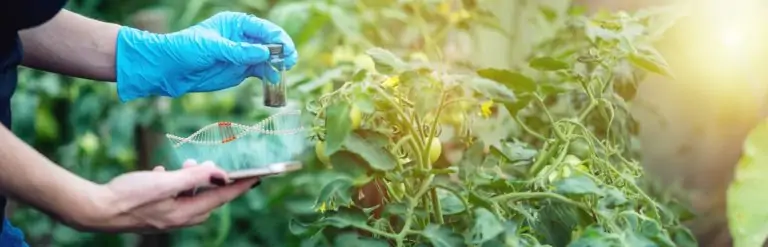
On the other hand, gene editing (CRISPR) is a precise way of altering or deleting DNA from the same species to obtain the desired outcome. Proponents say such edited crops simply speed up natural breeding techniques and could bring environmental benefits such as reducing pesticide use and breeding harder crops. The technology has recently gained momentum for its ability to expand the range of crop varieties with improved precision and lower costs.
Legal Status
There is controversy on whether gene-edited plants should be considered ‘genetically modified organisms, and the legal status of gene-edited crops varies across jurisdictions. The USDA has decided that it will not introduce specific regulations to approve the development of gene-edited crops, helping the development of gene-edited crop varieties in the US.
In 2015, Argentina published the world’s first regulation for new breeding technologies including genome-editing. The regulation introduces a case-by-case assessment to determine whether a crop will be regulated as GMO or not. In a nutshell, gene-edited crops will not be subject to GMO regulation if no transgene is inserted. Chile and Brazil followed Argentina’s lead. Both will regulate gene-edited products on a case-by-case basis and exempt them from regulation when there is no insertion of transgenes.
However, within the EU the European Court of Justice has ruled that gene-edited crops should be subject to the same stringent regulations that govern conventional genetically modified organisms (GMOs). The UK government has recently proposed legal changes which will make it easier to run field trials in England on crops that are gene-edited for environmental and nutritional benefits. It also plans future legislation so gene-edited crops and livestock that mimic the effects of natural breeding are treated differently to genetically modified (GM) ones, a step that would pave the way to gene-edited food being sold in UK supermarkets for the first time.
What are the challenges?
The regulations on health and safety, followed by consumer perceptions, and the media will play a major role in determining where and how new plant breeding technologies, including genome editing, will be developed and used in agriculture. In Europe, Greenpeace and Friends of the Earth are adamant that organisms produced by CRISPR are GMOs. Although the technique might not involve foreign DNA, they claim the proteins generated, especially by insertion or deletion, could be proteins with a novel and potentially dangerous function.
Few studies have looked at the publics’ attitude to CRISPR-produced food. However, one study found that familiarity with biotechnology and perceptions of food safety were key factors in the acceptance of CRISPR and GM food. Overall respondents valued CRISPR and GM food similarly – substantially less than conventional food.
While gene editing and CRISPR technologies offer a lot of potential in producing more food in a potentially more sustainable way, many challenges such as political and social controversies, intellectual property, regulation and technical challenges will have to be overcome before these technologies become mainstream.
Investing in agtech
The agtech industry is booming, spurred on by promises of greater productivity, sustainability, and return on investment. As more and more investors engage with this growing sector, it is crucial that they do so with a comprehensive understanding of the agtech landscape.
At Farrelly Mitchell, our agtech consultants deliver actionable data and recommendations on the most effective agtech investments within the industry. We have a deep understanding of the latest technology & innovation revolutionising the industry, and we can identify suitable agtech and digitalisation tools to maximise your productivity and efficiency. Contact us today to embrace change and transform your operations.