Europe belies its status as the smallest continent on the planet for many reasons, and none more so than the performance of its agricultural cooperatives. European agricultural co-operatives had a joint turnover of €237bn in 2019. Africa dwarves Europe but has so far failed to eclipse it in terms of agriculture performance. Is that likely to change?
Currently, agriculture accounts for 25 per cent of African GDP and 70% of employment, yet Europe, with nowhere near that level of commitment in demographic or economic terms, is generating higher agricultural outcomes more efficiently.
Better governance and technology forging brighter path
There is a growing belief that following a long period of dysfunction, African agrifood enterprises are beginning to bridge the gap and cooperatives are seen as a viable vehicle in the changing of the narrative. Previously African farming, composed predominantly of smallholder farmers, was seen to be hindered by a lack of collective action. But better regulation around governance and the emergence of data-driven technology is bearing fruit.
The various agtech now at play are being seen as helping agriculture coops overcome weather conditions and other variables to propel the sector to better outcomes.
There is an urgency around encouraging cooperatives, as global warming continues to impact by stealth. Much capacity building and training initiatives for cooperatives are being driven by a need to adapt to changed circumstances. Take the cocoa business in Cameroon, which currently finds itself in dire straits due as climate change advances.
Collectively combating climate change
Africa’s third-largest cocoa producer behind Ivory Coast and Ghana, Cameroon’s crop generated more than 15% of its export revenues in 2019. However, its long-term target to boost cocoa output to over 300,000 tonnes annually is now seen by analysts as unattainable unless changes are made and the country better adapts.
The UN’s Intergovernmental Panel on Climate Change had previously warned that if global carbon emissions continued to rise, entire cocoa economies could suffer as cocoa trees thrive in humid, equatorial areas that experience predictable bouts of sunshine and heavy rain.
These regions, which include West and Central Africa, are home to about 70% of the world’s beans, the main ingredient for chocolate. If carbon emissions aren’t curbed, scientists expect temperatures in cocoa-producing countries to rise by 3.8 degrees Fahrenheit on average, drying up the moisture needed for trees to flourish and damaging cocoa production, the U.N. report said.
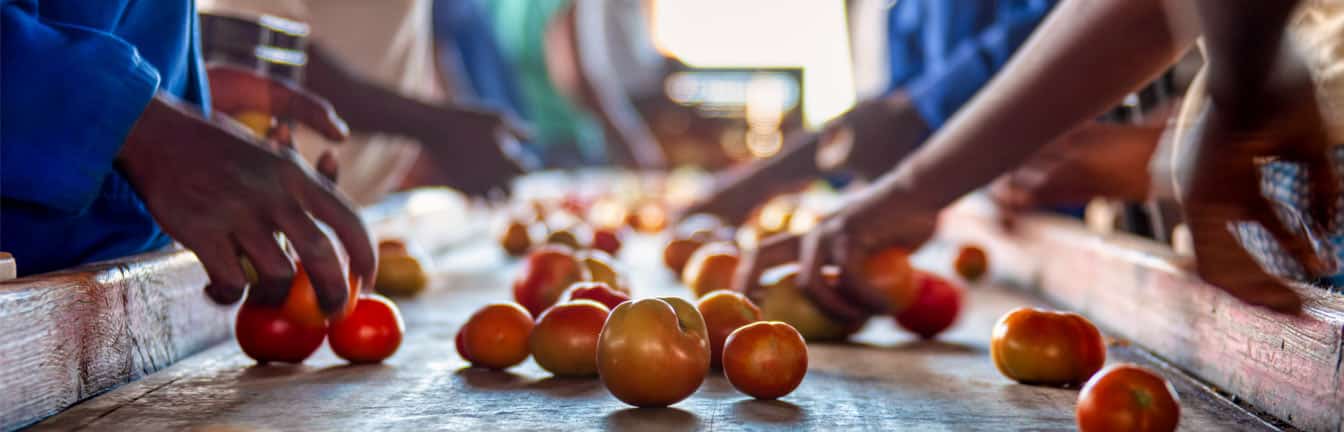
If the trend cannot be halted or reversed, farmers in these countries, including Cameroon, are considering a switch to tomatoes, which are deemed to fare better in the changing climate. A complete switch to a new crop would be more achievable to stakeholders if pursued on a cooperative basis, rather than an individual pursuit, as had been common for cocoa.
Previously, cooperatives were stifled by government control, and later when independent, poor ethical standards. But strides in governance are making a difference, and together with data-driven technology, breathing confidence in the sector from financial institutions.
Cooperatives harnessing innovation
Initiatives such as Microsoft 4Afrika, being undertaken in tandem with IFC/ World Bank support digital transformation in African agribusiness, modernising supply chains and boosting farmer productivity. That initiative involves the use of the KuzaBot communications platform, which provides mobile chat, disseminating vital information to cooperative members on good agricultural and business practices. Up until now the use of technology has been limited due to infrastructure, affordability, awareness and regulatory issues.
These technologies are providing hope that cooperatives can be a vehicle to optimise yields and profitability while improving traceability, food safety and access to finance. Statistics last year showed of the 10 countries most vulnerable to food insecurity, six were from Africa. There is evidence to suggest the story can be changed and Africa comes to match and even surpass Europe and other regions in agricultural terms in the decades ahead.
Stimulating African Agriculture
At Farrelly Mitchell, our goal is to empower food and agricultural organisations to make the right decisions. We have worked alongside governments, multilaterals, NGO’s and corporates to navigate evolving trends, policies and the knock-on effects of global events.
We offer a range of developmental services aimed at empowering the food and agribusiness industries throughout the global south, including training and capacity building, institutional development, programme design, market linkages, and much more. If you are looking for expert advice and insights, reach out to our team today.