
The Kingdom of Saudi Arabia imports approximately 80% of its food, but rather than treating that position as a vulnerability, Vision 2030 has reframed it as the basis for one of the world’s most ambitious sovereign food security strategies. Over the past decade the Kingdom has developed strategic equity stakes in leading global food companies, negotiated long-term supply agreements, and invested heavily in local processing capacity.
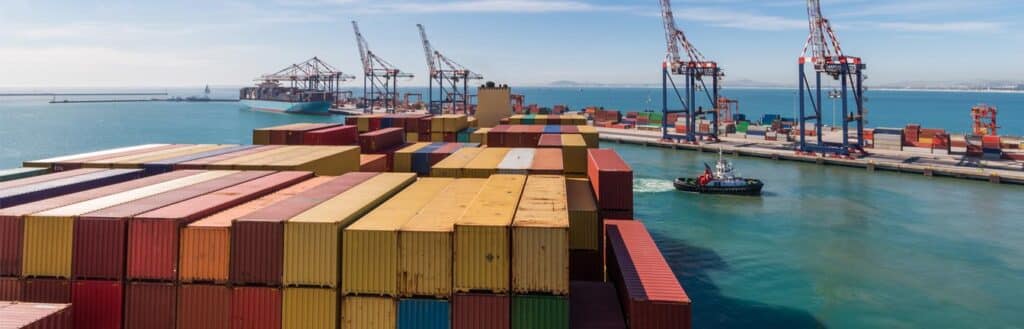
The necessity for such actions has been underlined by recent events. The regional conflict that escalated across the Middle East early this year has disrupted maritime trade and presented a stark reminder that resilience cannot be assembled once a crisis is already under way. Fortunately, the Kingdom’s measured, multi-layered strategy has been built up over years of patient, coordinated planning and rests on a solid foundation. It will undoubtedly be tested in the months ahead. But there is good reason to believe that Saudi Arabia can maintain stable food supplies and contain domestic price pressures even as more exposed importers face significant disruption and inflation. In this article, we examine the mechanics of Saudi Arabia’s food security approach and show why it is now widely regarded as a global benchmark.
From farmland to integrated supply
For sovereign investors, food processors, and policymakers across the GCC, Saudi Arabia’s food security model has become the reference case for how a structurally import-dependent economy can build resilience.
Previously, Saudi Arabia’s overseas food security strategy revolved around land ownership. Beginning with the 2008 food price crisis, the Kingdom and many of its Gulf neighbours acquired millions of hectares of farmland across Africa, South-East Asia, and Central Asia, spending hundreds of millions of dollars on the premise that controlling land meant controlling food supply.
However, results were mixed. Operational complexity, regulatory changes in host regions, and an inability to secure commodity flows during periods of disruption (precisely the moments when overseas farmland was supposed to deliver security) exposed structural weaknesses as producing countries imposed export restrictions that rendered ownership irrelevant. For instance, India banned non-basmati rice exports in July 2023. Indonesia banned palm oil exports in April 2022, and Russia’s naval blockade halted Ukrainian grain exports for five months in 2022. In short, direct land acquisition did not eliminate, or even meaningfully reduce, import dependence.
The Kingdom’s response has been to deepen its engagement rather than retreat from international markets. This has been driven by the recognition that influence over the commodity supply chain matters more than ownership of any single asset within it.
The Kingdom’s relationship with Brazil’s BRF (now part of MBRF Global Foods following the September 2025 merger with Marfrig) is arguably the clearest illustration of how this new approach works in practice.
In July 2023, SALIC International Investment Company acquired more than 10% of BRF (one of the world’s largest poultry producers). By May 2024, both parties had formalised a product supply agreement which would secure up to 200,000 tonnes of poultry produce per year for the Kingdom in the event of a food emergency. In April 2025, BRF’s board approved the development of a new processed food plant in Jeddah, and when it is complete, the facility will provide Saudi Arabia with more than 40,000 tonnes of halal-certified poultry and beef products every year.
This partnership is part of a deliberate, diversified strategy and similar structures are being deployed across other verticals. For instance, in February 2025, SALIC acquired an 80.01% interest in Olam Agri. This acquisition was paired with a strategic supply and cooperation agreement which has been specifically designed to address the Kingdom’s food security concerns.
When viewed from the outside, the geographic scope of this strategy is striking. It spans from massive grain and pulse operations in Canada and Ukraine to significant livestock and meat processing interests in Australia, as well as strategic rice and spice supply chains across India and Southeast Asia.
At the same time, Saudi Arabia’s ability to process and distribute food domestically is being reinforced through partnerships with global industry leaders such as JBS and Tyson Foods. Key to this has been the Jeddah Food Cluster. Launched in November 2024 and spanning 11 million square metres, the Jeddah Food Cluster already houses 124 operational factories producing close to four million tonnes of food per year. When combined, these commercial elements work in tandem to build durable, value-adding industrial capacity inside the Kingdom while delivering continuity of supply, even during periods of disruption. In doing so, these partnerships demonstrate that food security can be achieved through contractual access and domestic value creation, rather than through more capital-intensive and politically exposed routes, like owning overseas farmland and processing assets.
Forward considerations as the model expands
In many respects, the strength of Saudi Arabia’s current food security policy lies in its diversity of instruments, commodities and partners. No single asset, supplier or trade route carries the system on its own. This, coupled with the strategic execution of alternative overland trade routes and high-speed execution, has enabled the Kingdom to secure assets and develop a depth of redundancy that few import-dependent economies can match.
The timing of Saudi Arabia’s food security interventions seem prescient. Beyond the immediate disruption around the Strait of Hormuz, regulatory intervention is intensifying globally. The European Union’s forthcoming amendments to the FDI Screening Regulation, and the recent inclusion of the USDA in CFIUS, signal a tightening of oversight on cross-border agricultural investment and a broader clampdown on foreign ownership of strategic assets. This is likely to be heeded by other nations and regulators in the years to come. Consequently, Saudi Arabia’s early start may prove vital as the ability to employ a similar strategy may prove difficult for others to replicate in the future.
Setting the global benchmark for sovereign food security
What Saudi Arabia’s fully integrated, multi-layered food security strategy demonstrates is that resilience is built rather than bought. It is the product of many complementary instruments working in unison.
Strategic equity stakes in global agribusiness leaders have established relationships and signalled long-term commitment. Long-term supply agreements are converting those relationships into guaranteed access during periods of disruption, while in-Kingdom processing investments, alongside domestic champions such as Almarai, NADEC and NAQUA, are embedding supply chain control and bringing processing capability, technical expertise and value-added capacity into the Saudi Arabian food system. In short, each instrument is strengthening the others, and together they form a system that is far more resilient than the sum of its parts.
The results are increasingly visible in the numbers. Saudi Arabia is now self-sufficient in dairy and table eggs, and it ranks among the world’s leading producers of dates and farmed shrimp. Poultry self-sufficiency has reached roughly 70% and continues to climb as localised capacity expands. Taken together with the Kingdom’s record of price stability through periods of global disruption, it is clear to see why Saudi Arabia’s food security strategy is now proving to be a useful blueprint for other resource-constrained, import-dependent economies.
At Farrelly Mitchell, our agribusiness and food security specialists provide strategic, technical and commercial expertise to help sovereign investors, food processors and government partners design and execute their food security strategies. We advise on the structuring of cross-border equity partnerships, long-term supply cooperation agreements and in-country processing investments that enable durable, value-creating food systems. With a proven track record across the food and agribusiness value chain in Saudi Arabia and globally, we combine deep local market insight with international best practice to optimise operations, address complex challenges and capitalise on emerging opportunities. Contact our experts today to discuss how we can support your organisation’s continued growth and resilience.