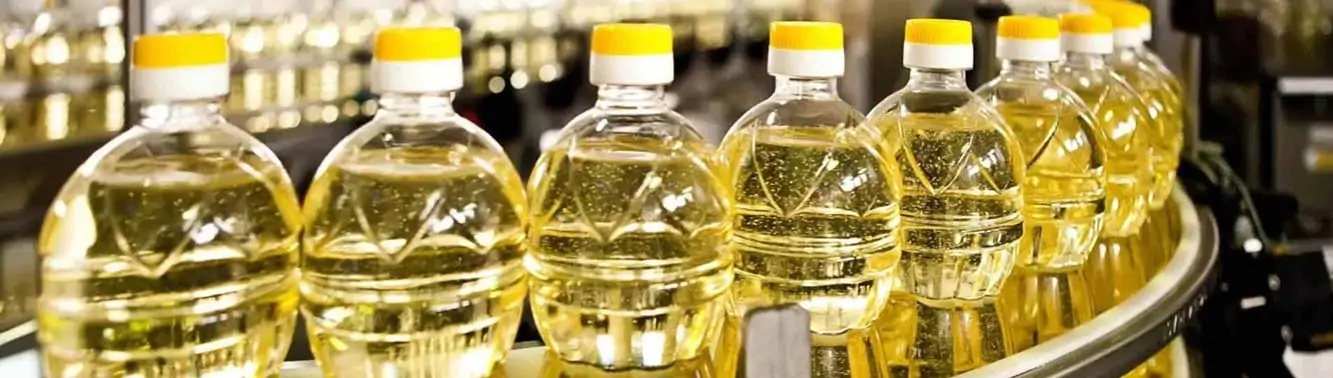
Indonesia is the largest producer and exporter of palm oil and accounts for more than half of the world’s supply. Palm oil is used in cooking, as an ingredient in processed foods, for cleaning products, cosmetics, biofuels, and other products.
At the end of April, the Indonesian government announced a 3-week ban on the export of palm oil due to concerns over rising domestic prices in the wake of the Russia-Ukraine war and rising global food prices.
Why did Indonesia ban palm oil exports?
President Joko Widodo had been concerned over cooking oil and other food prices since late November. President Widodo had promised to monitor prices after large demonstrations in the capital Jakarta over high food prices took place.
Palm oil is by far the most produced, consumed and traded edible oil in the world, and accounts for 40% of the supply of the top four most popular edible oils: palm oil, soybean oil, rapeseed oil (canola) and sunflower seed oil. Global palm oil production has already slumped during the first two years of the COVID-19 pandemic due to a drop in migrant labour on plantations in Southeast Asia.
Other edible oils have also seen reduced exports. Oil crop harvests in parts of the world such as Canada and Argentina have been erratic, and the cost of edible oil has been rising for years.
Major soybean oil producer Argentina is expected to ship less oil this year due to a poor growing season, and in 2021 drought devastated Canada’s canola harvest. Increased investment in biofuels for example renewable diesel projects in China, and biodiesel plants in Southeast Asia have also boosted the demand for edible oils.
What were the consequences of the export ban and why was it lifted?
The ban spooked global markets, which rely on Indonesia to meet 60% of global demand. The product is crucial and needed to produce everything from food products to shampoo and biodiesel. Following the ban, prices leapt by more than 200% on the global market.
The ban also led to a domestic surplus, and palm oil producers struggled with high inventories and surplus stocks. Despite palm fruit production increasing production of CPO (Crude Palm Oil)
was 18% lower than that in April. Processing companies stopped harvesting and buying fruit from smallholders due to the limited capacity of their storage tanks. Exports in May 2022 were 68% down from the previous month.
Over 17 million people work within the palm oil sector within the country, either in farming or processing. Reaction to the ban was initially mixed. Indonesia’s Oil Palm Farmers Union stated that the ban was temporary and necessary for the affordability of cooking oil in the domestic market. However, by May farmers started to protest the ban saying that it had hit their incomes.
Exports however have struggled since the end of the ban. Jakarta has maintained rules known as the domestic market obligation (DMO) which keep products at home to be made into cooking oil. The measures will guarantee over 10 million tons for the domestic market.
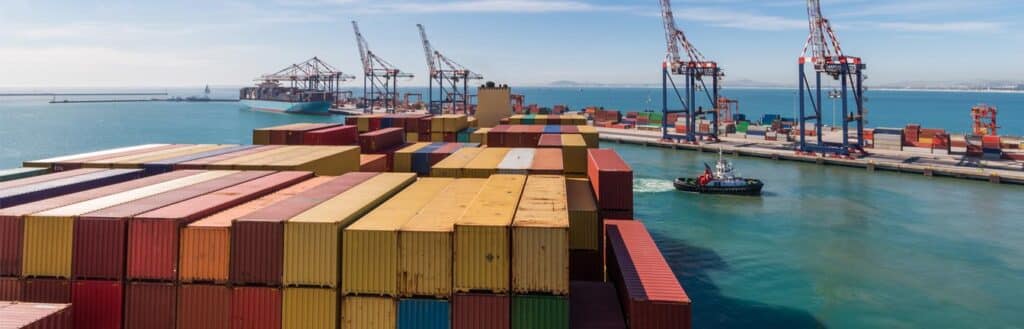
At the same time, it has tried to clear storage facilities by cutting export taxes and launching a shipment acceleration programme, but exports have not recovered, and companies have blamed the DMO rules, as well as problems with securing cargo vessels.
Do export bans help control food prices in the long-term?
Indonesia is not the first country to impose a ban on farm exports to protect domestic consumers from the impact of rising prices. During the food price spikes of 2007–2008, several countries restricted staple food exports, to maintain domestic supplies and in response to growing public discontent about rising food prices.
However, many claim that export restrictions often make a bad situation worse, contributing to food scarcity and higher food prices. For key staples such as wheat, rice, and soybean oil, it is claimed that these measures have pushed prices up by 9%. In the early 2000s the Argentine government sought to restrict beef exports in the face of rising domestic prices.
A 2006 temporary ban on beef exports was followed by a regulation to export only domestic surplus. The effect was a decade-long decline in the Argentine beef sector. From 2007 to 2012 the cattle herd declined by 10 million and there was a 300% rise in domestic cattle prices.
Trade ministers meeting in Geneva for the WTO’s Ministerial Conference in mid-June expressed their concern that trade disruptions could undermine food security. The Ministerial Declaration on the Emergency Response to Food Security stated that
Members imposing such measures should take into account their possible impact on other Members, including developing countries, and particularly least-developed and net food-importing developing countries.
There are many examples of market interventions during times of economic uncertainty and crisis having unintended consequences and the Indonesian palm oil export ban is one of them. Export restrictions damage domestic producers and production, which in the long term can actually lead to higher domestic prices – the exact opposite of what was intended.
Actionable food safety expertise
At Farrelly Mitchell, we understand how interconnected each part of the food system is at both a global and granular level. Our food safety experts guide clients in designing high-quality and robust agrifood control systems, taking every facet of the system into account.