
Market Lens
What higher diesel prices, the rerouting of grain shipments and a very strong El Niño mean for investors, executives and policymakers across the agrifood value chain.



Seaborne disruption sets the tone

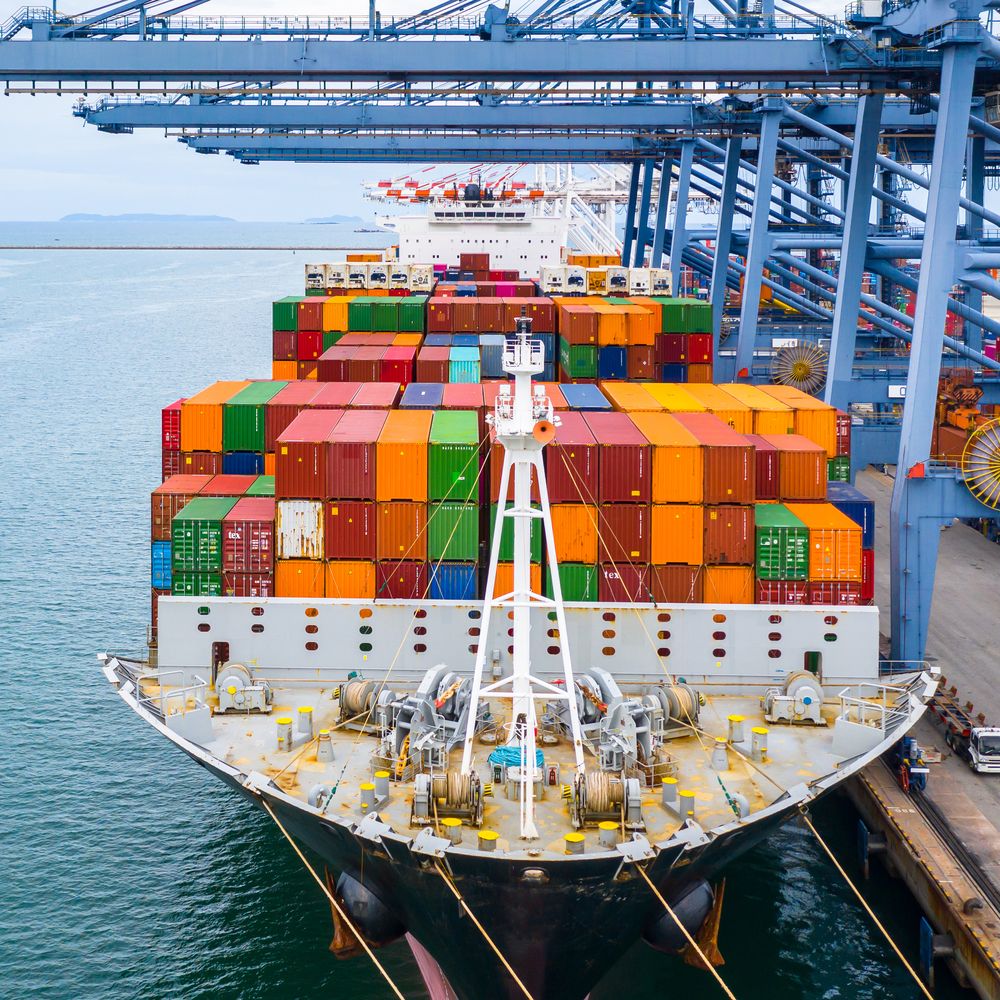
Global food markets continue to be dominated by disruptions to seaborne trade. Tightening diesel supplies are pushing input costs higher for both food production and transport, which is already being reflected in global food prices.
The most recent FAO Food Price Index showed increases across every major commodity sector, with wheat and maize markets particularly strong and vegetable oil prices reaching their highest level since mid-2022.
Russia has diverted grain shipments through Baltic and Arctic ports, with exports down by almost a third in July and August from 2025 levels. September shipments are on track to be half of last year’s level.
The El Niño event has further intensified this month, with forecasts predicting that a “very strong” El Niño should last into the first quarter of 2027. The event remains on track to be the strongest on record.
In the GCC, efforts are underway to establish strategic food stockpiles to improve regional resilience. In corporate news, Nestlé warned that higher freight, energy and raw-material costs, caused by the conflict in the Middle East, are hurting its global supply chain.
Prices stay elevated across the board

Below early-September peaks, well above a year ago
Highest since 2022 at the latest GDT auction
Tight pre-harvest supply and El Niño risk
Highest since mid-2022
Steady over recent weeks
Agricultural commodity prices remain elevated. While wheat and maize are below the peaks seen in early September, current prices are significantly higher than a year ago. In dairy, skim milk powder remained at its highest level since 2022 at the latest Global Dairy Trade auction. The reduction in supply from Iran, historically the world’s fourth-largest SMP exporter, coupled with higher energy prices, is driving the sustained increase in SMP prices this year.
Rice has also continued its move higher across major markets. The combination of tight pre-harvest availability and concerns around the potential impact of El Niño on Asian production suggests that there will be little relief in rice prices over the coming months.
Vegetable oil pricing also reflects El Niño risks, as well as what the FAO describes as “robust import demand”. The reduction in exports from Ukraine has been largely offset by very strong global production forecasts for the 2026/27 growing season.
In meat markets, prices have remained relatively stable over recent weeks. For beef, both Australia and Brazil have now filled their China quotas, which means there is a lot of beef looking for a new home. President Trump’s agreement to import 300,000 tonnes of ground beef will help sustain global prices.
Diesel, El Niño and a closed Black Sea

01Energy
Energy remains one of the biggest factors driving prices, with diesel a particular concern. Conflict in the Middle East and Ukrainian targeting of Russian energy infrastructure have seriously curtailed exports from those producers. There is little refinery capacity elsewhere to make up for the lost production, with US refiners running at their highest rate in eight years.
In the US, the idea of a 90-day ban on diesel exports has been floated as the Trump administration tries to reduce energy costs ahead of the country’s mid-term elections. This would add significantly to energy costs in the rest of the world, hitting food production and supply chains particularly hard.
02Weather
The latest El Niño forecast from NOAA puts the probability of a very strong event in the coming months at above 90%. More significantly, there is a high probability that the October–December event will break records dating back to 1950.
While the impacts from an El Niño event are both uncertain and non-linear, the current risk is particularly pronounced in Southeast Asia. Lower rainfall will hit yields, with the expectation of reduced output already showing up in pricing.
03Trade routes
Russia has turned to its Baltic and Arctic ports for grain exports, as the usual Black Sea route has been effectively closed due to the ongoing conflict with Ukraine. For its part, Ukraine has been exporting grain through its Danube River ports and is seeking access to Baltic ports, possibly through Poland. The Danube route adds ~$50/t in logistical costs for grain exports, while the Baltic route could add as much as $100/t, the country’s Ministry for Agriculture has said.
Danube route, added logistics cost
Baltic route, per Ukraine’s Ministry for Agriculture
Current forecasts suggest that Russian wheat exports from July through September will total 5.6 mmt, half of the 11.3 mmt seen a year ago.
The GCC moves to stockpile

The 38th meeting of the GCC Committee of Agricultural Cooperation and Food Security was held in Bahrain at the start of September.
Among the measures discussed was a proposal to establish GCC strategic food storage zones, which followed on from a directive issued earlier this year to improve the region’s ability to collectively confront crises and challenges to food security. This proposal sits alongside national measures cited by the committee’s secretariat, such as Saudi Arabia’s strengthening of strategic food reserves, Qatar’s implementation of its National Food Security Strategy 2030, Kuwait’s reinforcement of strategic reserves, Oman’s development of domestic agriculture value chains, and the UAE’s continued investment in agricultural technologies.

Strengthening strategic food reserves

Implementing its National Food Security Strategy 2030

Reinforcing strategic reserves

Developing domestic agriculture value chains

Continued investment in agricultural technologies
The disruption to local and international logistics is certainly a motivating factor. While there is no shortage of grain in Russia and Ukraine, the availability of that grain has been crippled by the closure of the Black Sea route. If the coming El Niño compounds this problem by limiting food production, then having sufficient buffers in place will be critical.
Nestlé feels the squeeze

Nestlé provided some useful insight into how developments in energy and agricultural markets are feeding through to global food prices and availability.
CEO Philipp Navratil said the company is raising prices, reformulating products and cutting items consumers are unwilling to pay more for as it tackles higher energy, logistics, and raw material costs.
The comments from Navratil reflect how increases in commodity prices are moving through the value chain. He is indicating that Nestlé is now at the point where the increases are forcing a decision on how much of the cost can be absorbed through margins and formulation adjustments and how much can be passed on to customers.

Volumes suffer

Margins take the hit
This problem is symptomatic of the one being faced by many large food manufacturing businesses. If prices are raised too aggressively, volumes will suffer, but if too much of the increased input costs are absorbed, then margins will take a significant hit.
Three signals for the months ahead

Energy prices and the Black Sea route are the most immediate risks for agricultural markets and trade, with weather set to become an increasingly important driver.
Russia’s and Ukraine’s ability to establish reliable routes will decide whether the drop in exports is a temporary logistical problem or a lasting constraint on global supply. Sales of this year’s crop may also affect the chances of a successful planting for 2027.
Developments in the diesel market are likely to be key. Any interruptions to US supply over the coming month will likely cause record fuel prices to move even higher.
Weather looks set to become a driving force behind market developments. While a very strong El Niño does not automatically mean lower overall global food production, early signs of its impact will soon be evident across important agricultural regions. Developments in Southeast Asian rice and palm oil production should be closely monitored.
The only certainty for the months ahead is that volatility will be the defining feature in both food prices and supply chains.
Farrelly Mitchell Market Lens October 2026 Edition.