The client
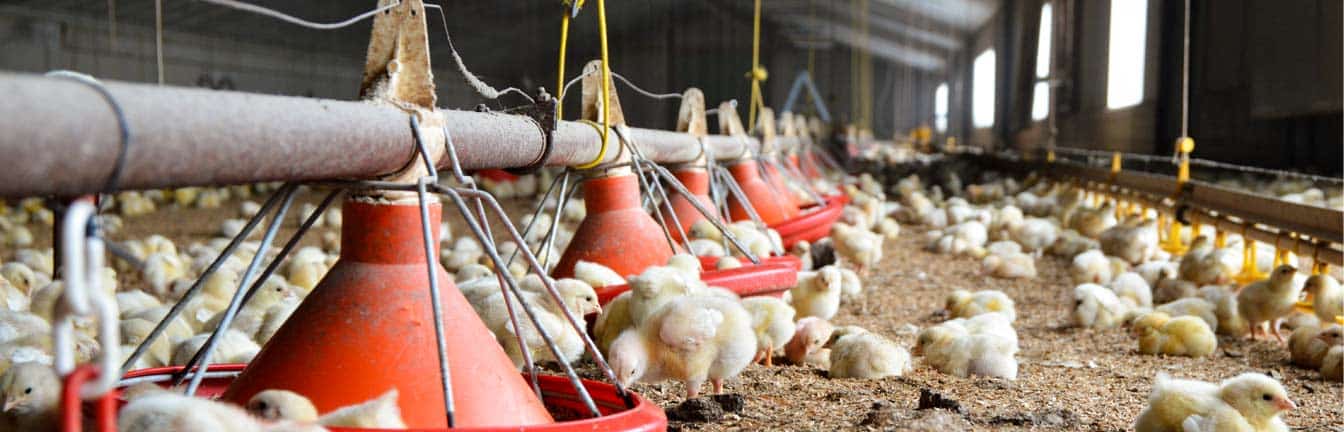
The client for this project is one of the largest integrated poultry companies in the Middle East, with a workforce numbering in the thousands and a vast retail and food service distribution network. They are a significant player in the region’s expanding poultry sector and a key contributor to the region’s food security objectives. With more than 40 different product offerings distributed to outlets across the GCC, their daily production capacity exceeds one million chickens. They operate a vertically integrated model spanning breeding, hatching, farming, feed milling, and processing. As part of this infrastructure, they operate six feed mills dedicated primarily to supplying their own poultry operations.
Background
The Middle East’s animal feed sector operates within a highly dynamic policy and market environment. National agriculture strategies across the region have set ambitious self-sufficiency targets, and to support these objectives, governments have introduced a range of interventions, including production subsidies, fast-track licensing, and capital expenditure support for new poultry operations.
These policy measures have stimulated considerable expansion within the GCC’s poultry sector, with large integrators and new entrants investing heavily in increased production capacity. For instance, in 2020 alone, more than 150 new construction licences were issued for poultry farms in one GCC market. Consequently, demand for poultry and ruminant feed has soared. However, the removal of commodity subsidies in some regions and restrictions on livestock imports have reshaped the feed market landscape, raising the cost of local livestock.
The problem
Over several decades, our client had built a formidable integrated business, and yet, despite the scale of its operational capabilities, they faced a strategic challenge in how best to monetise their spare feed milling capacity. The sheer scale of the commercial opportunity also sharpened the strategic dilemma. Competing in the commercial feed market introduced significant self-competition risks, as supplying feed to rival poultry farms in the region could strengthen competitors and erode the client’s own downstream market share. At the same time, processors and food service operators also posed indirect competitive threats.
In essence, the client needed a comprehensive understanding of what market opportunities were available as well as a clear assessment of where they could compete and win without compromising their core business. Without this intelligence, the organisation risked either leaving substantial capacity idle or entering market segments that could undermine their existing operations.
The solution
Farrelly Mitchell was engaged to quantify the surplus and then conduct a two-phase programme. Phase 1 would comprise of a market and landscape analysis, while Phase 2 would provide a commercial assessment and a business plan for the new strategic business unit.
In the first phase, Farrelly Mitchell deployed a holistic research methodology to capture critical data, this included workshops, exhaustive secondary research, local market intelligence and stakeholder insights. Together, these inputs allowed the team to develop and ratify market models. Next, the team conducted a detailed value chain analysis across three target sectors: compound feed, commodities, and premixes. For each sector, the analysis covered market potential, competition intensity, barriers to entry, strategic implications, alignment with regional agricultural strategies, and the client’s potential to compete and win.
The competitive landscape assessment was particularly rigorous. Farrelly Mitchell mapped the positions and strategies of the major integrators and commercial feed operators, analysed the self-competition dynamics inherent in an integrator entering the commercial feed market, and evaluated indirect competitive threats from processors and food service operators.
The second phase translated the market intelligence into an actionable commercial framework. The team developed a recommended business model and defined the strategy for the new SBU. This strategy covered target customer segments, the value proposition, the sales and marketing approach, as well as distribution channels. Following that, our financial modelling experts constructed a comprehensive ten-year financial model which incorporated revenue projections, cost breakdowns, key operating KPIs, and a detailed investment analysis. This analysis outlined internal rate of return, net present values, payback metrics and several other key financial benchmarks. Finally, the team proposed an organisational structure for the new business unit and developed a roadmap for implementation.
The impact
The market analysis and feasibility study delivered by Farrelly Mitchell provided the client with a detailed, evidence-based framework for the utilisation of its spare feed milling capacity. The study’s findings clarified which market opportunities were most attractive and which segments carried risks that could undermine the client’s core business.
The financial models and commercial analysis provided the client with a robust business case, and a clear go or no-go recommendations for each product category, while the implementation roadmap gave the client a practical, phased plan to execute the recommended strategy, ensuring that the transition from integrated poultry producer to diversified feed business could be managed in a structured and risk-aware manner.
Forge ahead with Farrelly Mitchell
At Farrelly Mitchell, we combine deep sector expertise with rigorous analytical frameworks to help agribusiness leaders navigate complex strategic challenges. Whether your organisation is underutilising capacity, exploring news business models and strategies, or seeking to strengthen your competitive position, our team delivers the market intelligence, strategic frameworks, and financial validation you need to make the right decisions.
We offer a comprehensive range of advisory services, including market and feasibility studies, commercial strategy development, operational analysis, and implementation support, providing your organisation with the clarity and insights it needs to drive strategic growth and build competitive advantage. To explore how Farrelly Mitchell can support your organisation’s growth and commercial objectives, contact our team today.